














When the Music Stops
“Special Report: What Happened to Festivals & Events Ontario?”
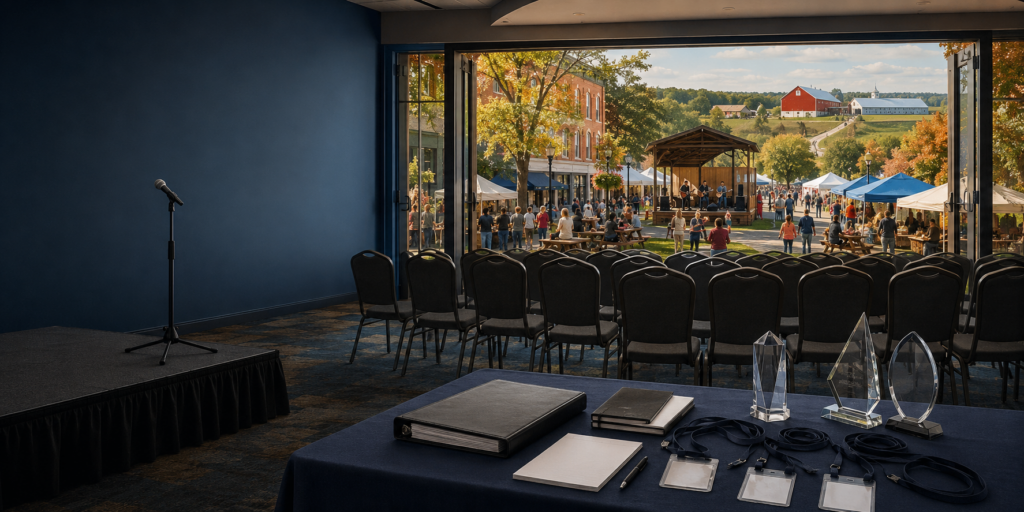
“When the Music Stops — Special Report: What Happened to Festivals & Events Ontario?”
As part of FES Tourism’s When the Music Stops series, we are publishing this Special Report examining the decision by Festivals & Events Ontario (FEO) to cease active operations and enter a period of dormancy after 40 years of serving Ontario’s festival and event community.
For decades, FEO provided education, professional development, networking, recognition, advocacy and a provincial voice for the people and organizations behind Ontario’s festivals and events. Its sudden move into dormancy raised important questions—not only about what happened to FEO, but about what its experience can teach every organization working to build and sustain community events.
This Special Report brings together official FEO communications, the July 13 Member Town Hall minutes, correspondence with the FEO Board, and our own firsthand experience as FEO members and industry participants. Where answers are available, we have included them. Where important questions remain unanswered, we have identified them as questions—not accusations.
This is not a report about assigning blame. It is about understanding what happened, protecting the legacy FEO built over four decades, and helping ensure that Ontario’s festivals and events continue to have the strong, sustainable provincial voice they deserve.
We publish it because we care about FEO, we care about Ontario’s festival and event community, and we believe there are important lessons here for all of us.
The music may have stopped for now. The question is what we do next.
Publication Update — August 8, 2026
A review draft of this Special Report was provided to the President and Board of Directors of Festivals & Events Ontario (FEO) on July 27, 2026. The Board was invited to identify factual errors or material omissions, provide dated documents or clarifying information, explain FEO’s present status and restructuring work, and submit an official statement for consideration in the final report.
Written comments were requested by August 7, 2026. No direct written response to the report was received by that deadline, nor had a response been received from the FEO President or Board at the time of publication on August 10, 2026. This report does not characterize the absence of a response as agreement, disagreement or refusal.
On August 4, FEO circulated to members a follow-up email and minutes of the July 13 Member Town Hall. Those documents were not a direct response to this report, but they contain important new information. They have therefore been incorporated into this final edition.
The minutes confirm that the pressures discussed at the Town Hall included declining membership and other revenues, the loss of Destination Ontario funding, increasing operating and conference costs, the continuing effects of COVID-19 on festivals, volunteers and participation, and staff and leadership transitions. They also confirm that, as of July 13, no final decision had been made regarding FEO’s future and no partnership or restructuring agreement had been signed.
This report should therefore be read as an examination of the documented circumstances and information available as of August 8, 2026 — not as a conclusion about FEO’s ultimate future.
Contents
Executive Summary
Purpose, Scope and Evidence Standards
Why FEO Mattered
Documented Chronology
The February Conference
The May Decision and Announcement
The Open Letter and June 19 Response
The July 13 Town Hall — What the Minutes Clarified
What Is Documented, Observed and Unanswered
Lessons for Festival and Event Organizations
Protecting FEO’s Legacy and a Path Forward
Personal Reflection
Relationship to When the Music Stops
Author’s Disclosure
Appendices: Source Communications
FES TOURISM
WHEN THE MUSIC STOPS
SPECIAL REPORT
What Happened to
Festivals & Events Ontario?
Dormancy, Unanswered Questions and Lessons
for Every Festival Organization
FINAL PUBLICATION EDITION
Prepared by Gary McWilliams
President, Festival and Event Services Inc. (FES Tourism)
Ontario Visited • Ontario Agritourism
August 8, 2026
Executive Summary
For 40 years, Festivals & Events Ontario — widely known as FEO — served the people and organizations responsible for festivals, celebrations and community events across the province. It provided education, professional development, networking, industry recognition, advocacy and a provincial meeting place. Its conference, awards and Top 100 Festivals and Events program helped organizers learn, connect and demonstrate value within their communities.
On May 14, 2026, FEO’s Board of Directors voted to cease active operations and place the organization into a period of dormancy while its affairs were addressed. Members were informed on May 15. The original announcement cited increasing financial pressures, changes in external funding support, rising operational costs and evolving industry conditions.
The official July 13 Town Hall minutes provide additional detail. They record declining membership and other revenues, the loss of Destination Ontario funding, increasing operating and conference costs, ongoing effects of COVID-19, and staff and leadership transitions as factors discussed by the Board. The minutes also state that no final decision had been made about FEO’s future and that no partnership or restructuring agreement had been signed.
The Town Hall was an information-sharing session. No motions, votes or formal decisions were taken. Thirty-seven members registered. The minutes record that members raised concerns about financial management, oversight and the timing of communication, and that the Board acknowledged concerns that earlier communication about financial pressures might have allowed members to offer suggestions sooner.
The new documents answer some questions, but not all. Members still have not been provided with detailed financial statements explaining the immediate circumstances leading to the May 14 decision. The public record reviewed for this report does not establish FEO’s cash reserves, liabilities, contractual obligations, the exact amount or timing of the Destination Ontario funding loss, or the complete sequence by which the organization moved from its February conference to dormancy in May.
This report does not fill those gaps with speculation and does not assign individual blame. Its purpose is to establish the clearest responsible record available, distinguish documented facts from firsthand observations, preserve FEO’s contribution and identify lessons that can strengthen festivals, events and industry organizations.
FEO may be dormant. Ontario’s festival industry cannot afford for its provincial voice to remain that way.
Purpose, Scope and Evidence Standards
This Special Report accompanies the ten-part When the Music Stops series. The ten numbered articles are not being reopened through this report.
This final edition is based principally on the following written communications and records:
- the official FEO Board announcement dated May 15, 2026;
- Gary McWilliams’s Open Letter dated June 15, 2026;
- the FEO President’s response dated June 19, 2026;
- the official invitation to the July 13 FEO Member Town Hall;
- Gary and Judi McWilliams’s follow-up communication after the Town Hall;
- the official Minutes of the Member Town Hall, July 13, 2026; and
- the FEO Town Hall follow-up email received August 4, 2026.
The report also includes Gary McWilliams’s firsthand observations as an FEO member, awards judge, conference participant and Town Hall attendee. Those observations are identified as personal experience and are not presented as independent findings about FEO’s internal finances, legal affairs or Board deliberations.
The author has not reviewed FEO’s complete financial statements, cash-flow forecasts, internal Board minutes, contracts, funding correspondence, corporate filings or legal advice. The report therefore cannot determine individual responsibility or reach a final conclusion about why dormancy became necessary.
Why FEO Mattered
Most people recognize the festivals and events held in their own communities. They remember a parade moving down Main Street, an outdoor concert, a cultural celebration, an agricultural fair, an arts festival, a winter carnival or a gathering where neighbours became friends. Far fewer recognize the provincial organization that worked behind the scenes to support the people responsible for those experiences.
FEO did not operate Ontario’s individual festivals. It brought organizers together, helped volunteers and professionals learn from one another, offered training and created opportunities to meet suppliers, municipal representatives, government partners and people facing similar challenges.
For smaller and volunteer-led events, that connection could be particularly important. These organizations may not have full-time staff, consultants or large training budgets. A workshop, informal conversation or relationship with an experienced organizer can prevent a costly mistake or reveal a new direction.
FEO’s awards and Top 100 program also mattered. Provincial recognition could strengthen a funding or sponsorship proposal, demonstrate value to a municipal council, attract media attention, improve volunteer morale and give a community a reason to celebrate.
Why the loss of active operations matters
The dormancy of an industry association does not produce the same visible effect as the cancellation of a festival. There is no empty midway, cancelled parade or silent stage to photograph. The damage appears gradually: one less source of training, one less industry connection, fewer opportunities to share successful ideas and fewer coordinated messages reaching provincial decision-makers.
Festivals generate visitor spending, support local businesses and create fundraising opportunities. They preserve traditions, help newcomers participate in community life and give young volunteers opportunities to develop confidence and leadership.
FEO strengthened organizers. Organizers strengthened events. Events strengthened communities.
Agricultural fairs and the OAAS distinction
Agricultural fairs are events, and some may have participated in FEO. Ontario’s agricultural fairs, however, are principally represented by the Ontario Association of Agricultural Societies (OAAS), a distinct organization with its own membership, district structure, education, convention and provincial role. FEO’s dormancy should not be interpreted as leaving agricultural fairs without a provincial home. The broader festival and event sector faces a different situation.
Documented Chronology
| Date | Documented event |
| Feb. 23–25, 2026 | FEO holds its SUSTAIN Conference in Kitchener. Awards and Top 100 recipients are recognized; an executive retirement is announced. |
| May 14 | Board votes to cease active operations and place FEO into dormancy. |
| May 15 | Board informs members and cites financial and operational pressures. |
| June 15 | Gary McWilliams issues an Open Letter requesting answers, member engagement and a recovery process. |
| June 19 | FEO President responds, describing Board work as restructuring and promising a membership meeting within two weeks. |
| July 13 | FEO holds a Member Town Hall by Zoom. The later official minutes state that 37 members registered; no motions, votes or formal decisions occurred. |
| Following Town Hall | Gary and Judi McWilliams propose an independent examination and wider member consultation. |
| July 27 | Review draft of this Special Report is submitted to the President and Board for factual comment by August 7. |
| Aug. 4 | FEO circulates the Town Hall minutes and a member follow-up email. The Board says restructuring and potential partnerships remain under review and no final agreement has been reached. |
| Aug. 7 | Deadline for direct written comment on this report passes without a response addressed to the report. |
| Aug. 8 | Final publication edition prepared, incorporating the official Town Hall minutes and August 4 follow-up. |
The February Conference
FEO held its annual SUSTAIN Conference in Kitchener from February 23 to 25. It included education, networking, awards and recognition of festival achievements. Gary McWilliams attended and served as an awards judge. From his position as a participant, the conference appeared to proceed normally. He was not aware of any warning that FEO might cease active operations approximately three months later.
The February gathering was a conference, not FEO’s Annual General Meeting. According to the explanation later given at the Town Hall, the AGM would ordinarily have occurred later and was not held because active operations ceased before it took place. The correction matters. The underlying concern remains that members moved from a provincial conference celebrating festival sustainability to dormancy without receiving the organizational and financial reporting that would ordinarily have been provided at the later AGM.
The May Decision and Announcement
On May 14, 2026, the Board of Directors of Festivals & Events Ontario (FEO) voted to cease active operations and place the organization into a period of dormancy while the organization’s affairs are addressed.
This remains the clearest official description. FEO was not reported as legally dissolved. The May 15 announcement said the decision followed a review of the organization’s financial position and operational sustainability. It referred to increasing financial pressures, changes in external funding support, rising operational costs and evolving industry conditions.
The July Town Hall minutes later added important specificity: declining membership and other revenues; loss of Destination Ontario funding; increasing operating and conference costs; ongoing effects of COVID-19 on festivals, volunteers and participation; and staff and leadership transitions, including retirements and resignations.
Neither the May announcement nor the Town Hall minutes provide the amount of the Destination Ontario funding loss, a balance sheet, liabilities statement, cash-flow forecast or a detailed financial chronology. The absence of those details does not mean they did not exist or were not considered; it means they have not been provided in the documents reviewed for this report.
The Open Letter and June 19 Response
Gary McWilliams’s copy of the May announcement was diverted to his spam folder. He learned about FEO’s situation later from another industry contact and issued an Open Letter on June 15. The letter recognized FEO’s advocacy, training, research, mentorship, Top 100 program and role in connecting the festival community. It asked questions about financial oversight, member engagement, governance and FEO’s future.
The letter proposed a detailed written explanation, a member Town Hall, a revival task force, a bridge-funding strategy and renewed attention to grassroots and volunteer-led festivals. It also asked what role the Government of Ontario might play in stabilizing the organization, given the sector-wide benefits festivals deliver.
We have been working diligently at restructuring the organization and will be updating the membership at a meeting in the next two weeks as to how we will be best supporting the industry in Ontario.
— FEO President, June 19, 2026
The eventual Town Hall was held July 13, more than three weeks after the June 19 response and later than the stated two-week period. The correspondence reviewed does not explain the delay, and no motive is inferred.
The July 13 Town Hall — What the Minutes Clarified
The official invitation described the Town Hall as an opportunity to update members on FEO’s status, work taking place behind the scenes and efforts to move the organization forward. It also said the Board was engaged in discussions with other organizations regarding opportunities to continue serving Ontario’s festivals and events industry.
What the official minutes now establish
- The purpose was to provide members with an update on financial and operational challenges, answer pre-submitted questions and hear member feedback.
- Thirty-seven members registered.
- The meeting was an information-sharing session; no motions, votes or formal decisions were taken.
- The Board discussed declining membership and other revenues, loss of Destination Ontario funding, increasing operating and conference costs, ongoing COVID-19 effects, and staff and leadership transitions.
- No final decision had been made regarding FEO’s future and no partnership or restructuring agreement had been signed.
- The Board addressed 11 questions submitted in advance. Topics included financial management and oversight, timing of communication, programs and services, possible partnerships, conferences, awards, education and member support.
- The Board acknowledged concerns that earlier communication about financial pressures may have allowed the membership to offer suggestions sooner.
- The Board did not commit to membership-fee refunds during the Town Hall.
- FEO’s webinars, templates and past meeting recordings were described as organizational assets to be made appropriately available once a workable path forward is established.
- The Board committed to circulate minutes, send a member questionnaire, provide updates when meaningful information becomes available and consider further outreach to Hall of Fame inductees.
What the minutes do not provide
The minutes are explicitly described as a summary rather than a verbatim transcript. They do not reproduce the exact wording of all questions and answers. They also do not provide detailed financial statements, the amount or timing of the Destination Ontario funding loss, a complete decision chronology, or a timetable for a final decision about FEO’s future.
The August 4 follow-up reiterates that the Board continues to review restructuring and potential partnerships, that no final agreement has been reached or signed, and that a member questionnaire will be circulated. It promises further updates when meaningful information becomes available but gives no date for another Town Hall, formal members’ meeting, membership vote or final decision.
What Is Documented, Observed and Unanswered
Documented through written communications
- The Board reviewed FEO’s financial position and operational sustainability.
- The Board voted May 14 to cease active operations and place FEO into dormancy.
- The May 15 announcement cited financial pressures, funding changes, rising costs and evolving industry conditions.
- The Town Hall minutes add declining membership and other revenues, loss of Destination Ontario funding, increased operating and conference costs, ongoing COVID-19 effects, and staff and leadership transitions.
- FEO had no employees after the retirements described in the May announcement.
- The June 19 response described Board work as restructuring.
- The July 13 Town Hall was information-sharing only; no motions, votes or formal decisions occurred.
- As of July 13, no final decision had been made about FEO’s future and no partnership or restructuring agreement had been signed.
- The Board acknowledged member concerns about the timing of earlier communication.
- The August 4 follow-up said restructuring and potential partnerships remained under review and no final agreement had been reached.
Firsthand observations reported by Gary McWilliams
- The February conference and awards process appeared to proceed normally from his perspective.
- He heard no warning at the conference that active operations might soon cease.
- His copy of the May 15 email entered his spam folder and he learned of the situation later from another industry contact.
- He attended the July 13 Town Hall and believed it provided useful information but limited clarity on several financial and governance questions.
- He and Judi proposed an independent review involving experienced FEO volunteers, Hall of Fame recipients, legal and accounting expertise and an Ontario government representative.
- A review draft of this report was sent to the FEO President and Board on July 27 with an August 7 deadline for factual comment. No direct written response to the report was received by that deadline.
Questions that remain unanswered in the records reviewed
- What was FEO’s complete financial position on May 14, including cash reserves, liabilities and contractual obligations?
- What was the amount and timing of the Destination Ontario funding loss, and how significant was it relative to FEO’s annual operating budget?
- When did the Board first determine that continuation of active operations was in serious doubt?
- What financial reports and forecasts were provided to directors before the May 14 vote?
- Which cost reductions, bridge funding, restructuring or partnership options were considered before dormancy?
- Were members, sponsors, governments or sector partners asked to assist before May 14?
- What role, if any, has the Government of Ontario played in discussions since dormancy?
- What does dormancy mean under FEO’s bylaws and corporate structure?
- How and when will members participate in deciding FEO’s future?
- Will there be another Town Hall, formal members’ meeting or membership vote?
- What conditions would permit reactivation, restructuring, merger, program transfer or creation of a successor organization?
Important distinction: these are questions, not accusations. They should be answered through records and responsible examination rather than rumour or assumption.
Lessons for Festival and Event Organizations
1. Board-level financial literacy
A respected history, loyal membership and successful programs do not guarantee sustainability. Every director must understand the organization’s financial and operational condition; oversight cannot rest solely with an executive, treasurer or small group of officers. Boards need understandable information about cash, liabilities, revenue trends, major program performance, contractual obligations and cash-flow scenarios — and directors must be prepared to ask difficult questions while choices remain.
2. Diversified revenue and adequate reserves
Organizations relying heavily on one grant, sponsor, conference or program are vulnerable. The Town Hall minutes make the lesson especially concrete by identifying both declining membership and other revenues and the loss of Destination Ontario funding among the pressures discussed. Sustainable models require diversified revenue and sufficient reserves to create time for communication, restructuring and responsible decision-making.
3. Crisis communication
Members are more than customers. They pay fees, attend conferences, volunteer, judge awards, sponsor programs and contribute knowledge. Legal and personnel matters may remain confidential, but organizations should decide in advance who communicates, when special meetings are required, what aggregate financial information can be shared, how frequently updates will occur and how members can offer practical assistance. FEO’s own minutes record concern that earlier communication might have allowed members to contribute ideas sooner.
4. Leadership succession and institutional knowledge
The departure of long-serving staff or leaders can expose vulnerabilities. Relationships, passwords, contracts, funding histories and operating procedures may reside with a small number of people. Written succession plans, cross-training, secure system access and orderly transfer of knowledge are permanent governance responsibilities, not emergency tasks.
5. Organizational resilience and continuing purpose
Resilience requires knowing which programs are essential, which can change and which may no longer be sustainable. Organizations should regularly ask whether they still serve their founding purpose, whether member needs have changed, whether younger leaders have a place and what would happen if a major funder, sponsor or leader disappeared tomorrow.
6. Member participation before the crisis point
A Town Hall after active operations cease can provide information and gather ideas, but it cannot replace a culture of ongoing member engagement. Where bylaws and circumstances permit, members should understand how major decisions will be made, when they will be consulted and what formal role they have in determining the organization’s future.
Protecting FEO’s Legacy and a Path Forward
Regardless of whether FEO resumes active operations, its 40-year legacy should be protected. The Town Hall minutes specifically confirm that proprietary materials and resources — including webinars, templates and past meeting recordings — remain organizational assets. The broader legacy may also include awards and Top 100 records, Hall of Fame history, photographs, research, government submissions, supplier relationships and governance records.
Those assets represent decades of participation by staff, directors, members, speakers, judges, sponsors and volunteers. Losing them would force any future organization to rebuild knowledge the industry has already created.
Constructive next steps
A written status report. Explain FEO’s corporate status, what dormancy means, work completed since May 14, whether restructuring or partnership discussions continue, how records are protected and when members will receive another update.
Independent fact-finding. Examine finances, governance, succession, communications and the decision chronology without assuming misconduct.
Meaningful member consultation. Complete the promised province-wide questionnaire and consider regional discussions or working groups. Clarify whether members will have a formal vote or other decision-making role.
Protection of records and programs. Secure educational resources, awards, Top 100 history, Hall of Fame records and industry research.
A clear decision about the future. Determine whether the objective is reactivation, restructuring, partnership, merger, program transfer or a successor organization — and communicate the timetable.
Government participation without government control. Explore an appropriate role for provincial participation or transition support while preserving the independence required for credible industry advocacy.
Reasons for hope
FEO’s active operations have ceased, but the community it created has not disappeared. Knowledge remains with former employees, directors, members, Hall of Fame recipients, speakers, judges, municipal representatives, suppliers and organizers. The minutes record recognition of the value FEO provided and the willingness of members and Hall of Fame inductees to offer ideas, expertise or assistance.
Ontario is not starting with nothing. It is starting with 40 years of experience — achievements worth preserving and difficult lessons worth understanding.
Personal Reflection
I did not raise questions about FEO because I wanted to damage an organization that had contributed so much to Ontario. I raised them because Judi and I cared about FEO and believed in what it represented.
As members and awards judges (Gary), we saw extraordinary work being done by organizers throughout the province. FEO recognized that work and brought together people who understood that festivals and events are essential to community life.
The official communications now establish more of the chronology and correct some early misunderstandings. The February conference was not the AGM. FEO was placed into dormancy rather than reported as legally dissolved. The Town Hall minutes now identify the loss of Destination Ontario funding and other specific pressures. They also confirm that the Board had not reached a final decision about FEO’s future as of July 13.
Those corrections and clarifications matter. So do the questions that remain.
Perhaps the Board faced circumstances in which ceasing active operations was the only responsible choice. Perhaps efforts were made that could not be discussed publicly. Perhaps FEO could not have been saved. The records available to me do not provide enough information to know.
That is why I continue to support an independent, constructive examination — not to attack volunteers, former staff or directors, but to understand what happened, preserve what FEO created and help build a sustainable future for Ontario’s festival industry.
The objective is not to determine who should be blamed for the past, but to help ensure that the circumstances leading to FEO’s dormancy are understood and, wherever possible, are not repeated in whatever organization carries this important work forward.
Ontario’s festival community deserves reliable answers. More importantly, it deserves a strong future.
— Gary McWilliams
FEO’s Final Lesson Must Be Shared
For 40 years, FEO encouraged festival and event organizers to learn from one another. Its experience may now provide one of its most important lessons. Organizations need transparent finances. Boards need timely information and the confidence to ask difficult questions. Revenue must come from more than one vulnerable source. Leadership transitions require documented succession plans. Members need regular communication. Records and institutional knowledge must be protected. Problems must be confronted while workable choices remain.
FEO’s dormancy does not prove that any individual acted improperly. It does demonstrate how quickly a valued organization can lose its active capacity — and how deeply that loss can affect the people who depended upon it.
FEO may be dormant. Ontario’s festival industry cannot afford for its provincial voice to remain that way.
Relationship to When the Music Stops
This Special Report accompanies the ten-part When the Music Stops series and should be linked directly from Article Seven: Who Will Speak for Ontario’s Festivals Now? Article Seven examines the provincial leadership gap and the structure, responsibilities and financial foundation required for a credible successor or reactivated organization. This report examines the documented FEO chronology, unresolved questions and lessons for other organizations.
Author’s Disclosure
Gary McWilliams was a paying FEO member, conference participant and awards judge. His wife and business partner, Judi McWilliams, also supported FEO and Ontario’s festival industry.
This report incorporates Gary’s firsthand experiences and correspondence. Those observations are identified separately from facts established through official FEO communications.
The author has not reviewed FEO’s complete financial records, internal Board minutes, legal advice, funding agreements or corporate filings. No conclusion is reached about individual responsibility for FEO’s dormancy.
Appendices — Source Communications
The following source record identifies the communications used in preparing this final edition. The original documents should be retained with the editorial file. This edition summarizes the documents rather than reproducing every page in full.
Appendix A — Official Board Announcement
May 15, 2026
Board announcement that the May 14 vote ceased active operations and placed FEO into dormancy; cited financial pressures, changes in external funding support, rising costs and evolving industry conditions.
Appendix B — Open Letter to the Board and Members
June 15, 2026
Gary McWilliams’s request for financial clarity, member engagement, governance answers, a Town Hall, revival task force and bridge-funding strategy.
Appendix C — President’s Response
June 19, 2026
Response advising that the Board was restructuring the organization and would update members at a meeting within two weeks.
Appendix D — Official FEO Member Town Hall Invitation
July 2026
Invitation describing the purpose of the July 13 Town Hall and confirming discussions with other organizations regarding possible future support for the sector.
Appendix E — Gary and Judi McWilliams Follow-up
July 2026
Follow-up proposing an independent review involving experienced FEO volunteers, Hall of Fame recipients, legal and accounting expertise and an Ontario government representative.
Appendix F — Minutes of the Member Town Hall
July 13, 2026
Official summary confirming the pressures discussed, 37 registrations, the information-sharing status of the meeting, absence of formal decisions, member concerns about communication timing, and the Board’s continuing review of options.
Appendix G — Town Hall Follow-up Email
Received August 4, 2026
Member communication distributing the minutes, confirming that no final restructuring or partnership agreement had been reached, promising a member questionnaire and further updates when meaningful information becomes available.
Appendix H — Review Opportunity Record
July 27–August 7, 2026
The review draft was supplied to the FEO President and Board on July 27 with a written-comment deadline of August 7. No direct written response to the report was received by that deadline.
END OF FINAL PUBLICATION EDITION