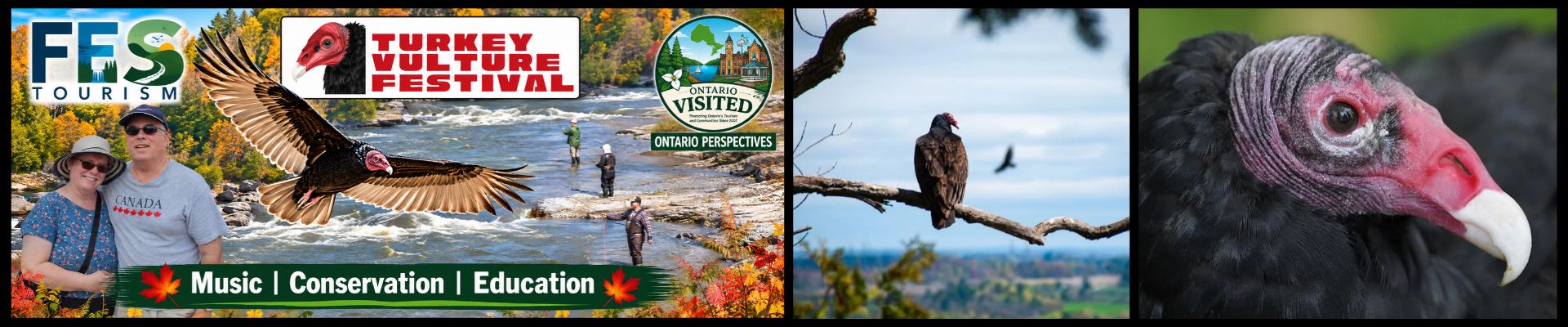














Turkey Vulture Festival
Turkey Vultures: More Than Just “Fishy Fast Food”
The town of Port Hope has added a new event to its annual calendar or at least that’s the hope from the mayor following the first Turkey Vulture Festival that was held September 27, 2026.
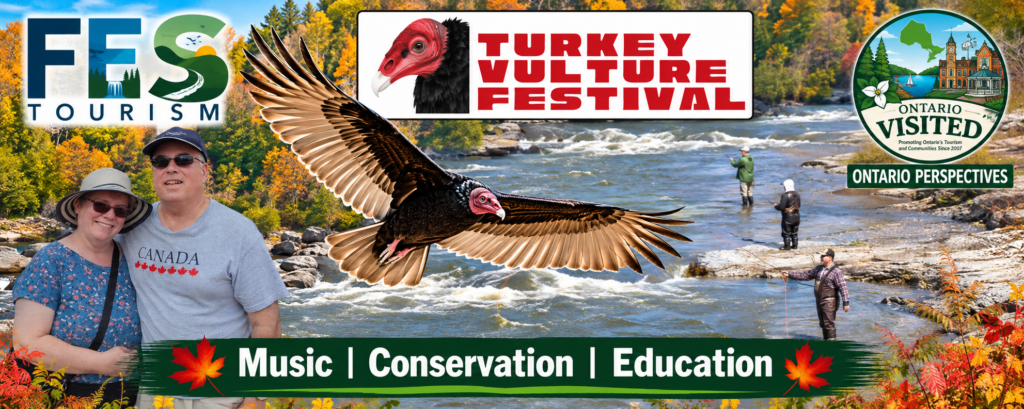
Turkey Vultures: More Than Just “Fishy Fast Food”
Executive Summary
Every autumn, something interesting happens along the Ganaraska River in Port Hope. Salmon make their way upstream, visitors gather along the riverbanks to watch — and high above them, another seasonal visitor is paying very close attention.
The turkey vultures have arrived.
In September 2026, Port Hope turned these often-misunderstood birds into the stars of a new Turkey Vulture Festival, combining wildlife, conservation, music and a little bit of fun along the Ganaraska River.
Ontario Visited’s Senior Event Correspondent, Kevin Andrade, and his wife Joanne were there for the inaugural festival. Their report gives us a look at the event itself.
But it also raises an interesting question.
Why celebrate turkey vultures?
As it turns out, these big, bald-headed birds are much more fascinating — and much more important — than their somewhat sinister reputation might suggest.
From Our Senior Event Correspondent
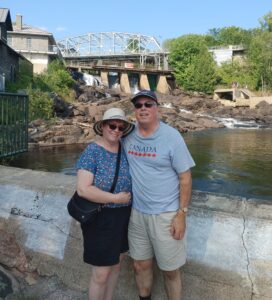
Kevin & Joanne Andrade
Over the years, Kevin Andrade, Ontario Visited’s Senior Event Correspondent, and his wife Joanne have visited events and attractions throughout Ontario, sharing their experiences with readers of Ontario Visited and FES Tourism.
This time, however, they didn’t have far to travel.
Kevin and Joanne live in Port Hope, where a rather unusual new celebration arrived on the community’s event calendar — the Turkey Vulture Festival.
With the Ganaraska River running through the heart of town, salmon in the river, turkey vultures overhead and an afternoon of activities and entertainment along the riverbanks, Kevin and Joanne went to see what this first-time festival was all about.
Here is Kevin’s report.
Turkey Vulture Festival
The town of Port Hope has added a new event to its annual calendar or at least that’s the hope from the mayor following the first Turkey Vulture Festival that was held September 27.
It was centred around the fact that while the fish are really jumping in the Ganaraska River which runs through the centre of town, these predators are hovering overhead looking for some fishy fast food. Indeed a few were spotted during the five-hour event set along both sides of the river.
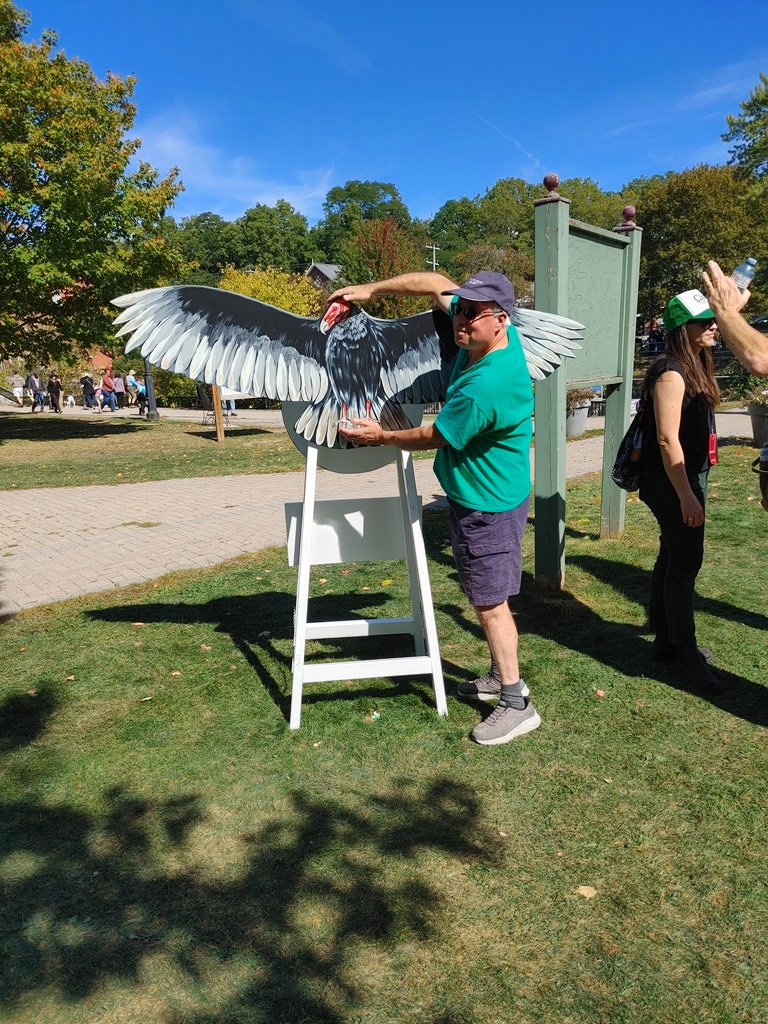
The event was conceived and organized by Caolaidhe (Caley) Keelor, wife of Greg Keelor of Canadian favourites Blue Rodeo. In her own right she is an avid falconer who has studied the lifestyle and habits of these unattractive but intriguing creatures.
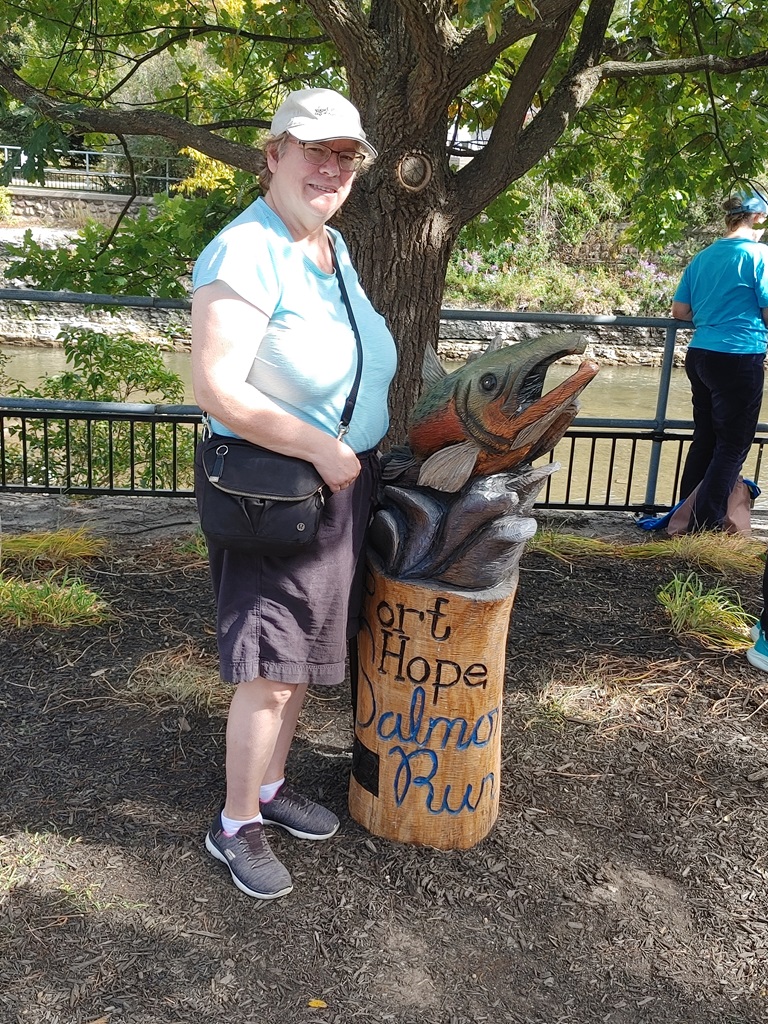
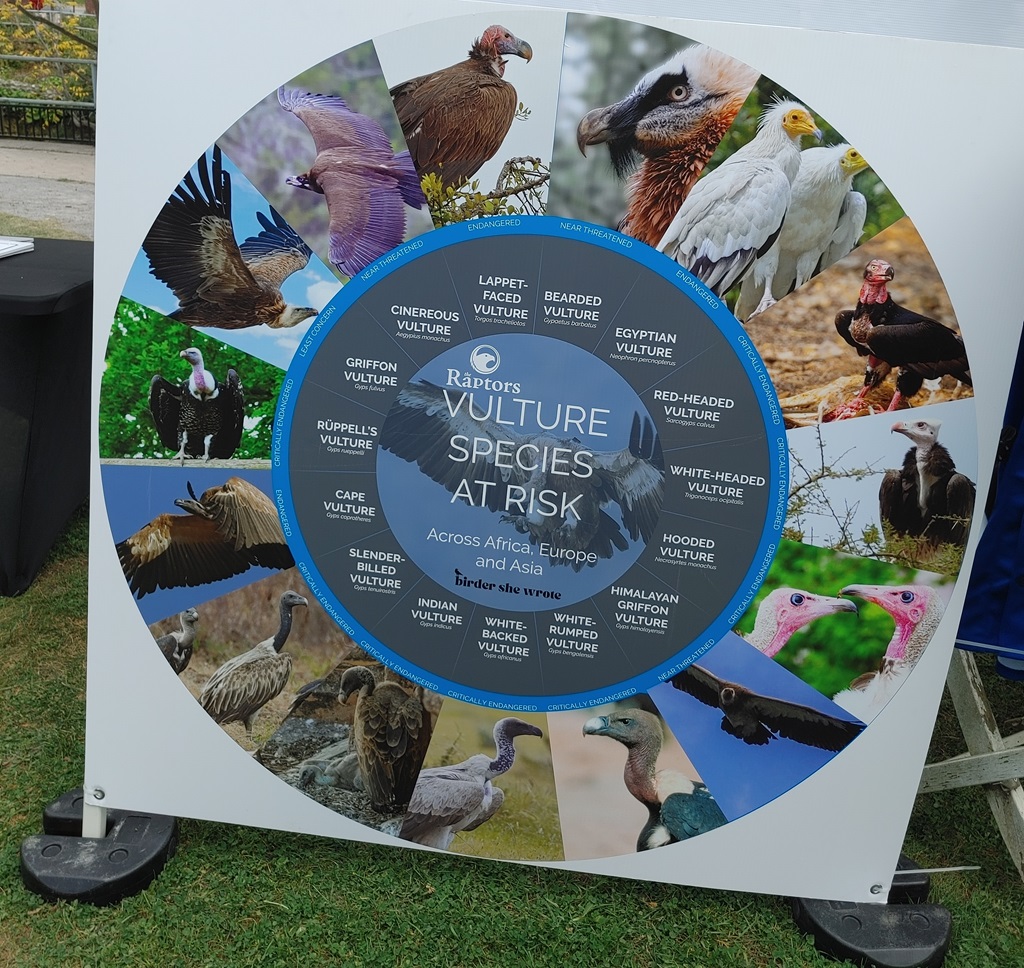
There were several booths set up from various naturalist organizations such as Ducks Unlimited and the local Northumberland Land Trust in addition to groups from Alderville first Nation. Crowds saw various species of turtles and birds including a “resident” turkey vulture which proved to be quite a draw. There was also a display from students from Guelph University who have been working with these and other groups to educate the public and help preserve the environment for these creatures.
Naturally because of Caolaidhe’s direct connections, Greg Keelor and his band headlined a lineup of musical entertainment that also included local favourite and current Blue Rodeo member Jimmy Bowskill. Also in the lineup were Matt Mays and Terra Lightfoot. For a first-time event it was extremely well attended and the crowd provided much backup singing on many of the songs performed to the backdrop of the river and the gorgeous weather.
We will certainly look forward seeing this special event become an annual tradition.
So, What’s So Special About a Turkey Vulture?
Kevin’s description of vultures hovering above the Ganaraska looking for some “fishy fast food” captures the scene rather nicely.
But why were they there?
And why would anyone build a festival around them?
To answer that, we need to get better acquainted with one of Ontario’s most recognizable — and perhaps least appreciated — birds.
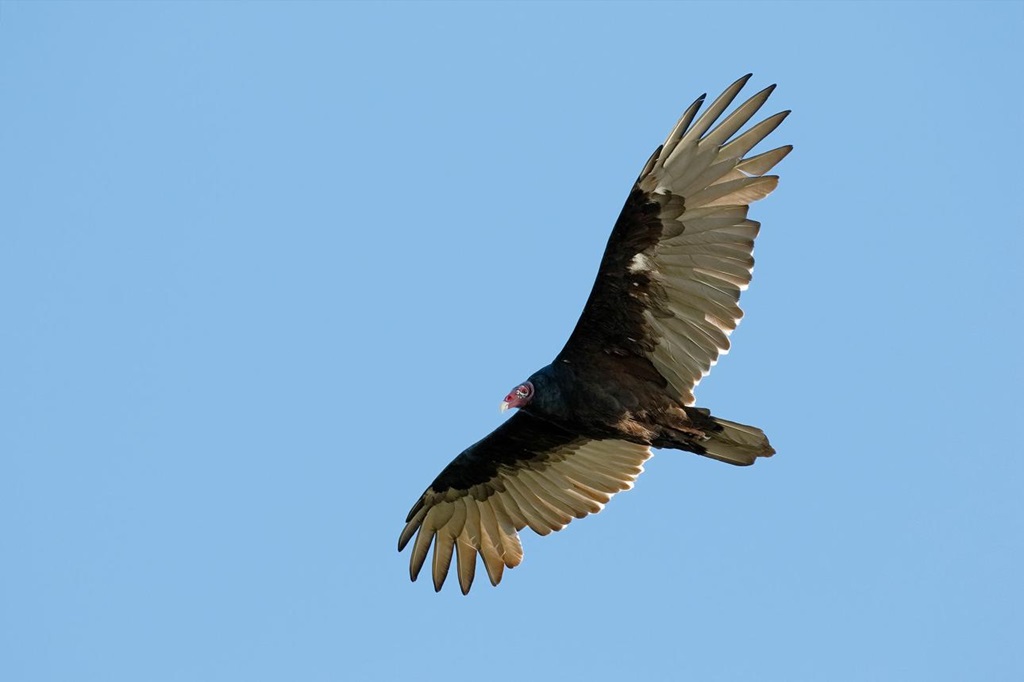
Turkey vulture in flight
Meet Ontario’s Cleanup Crew
Turkey vultures are big birds.
With broad wings stretching close to two metres across, a turkey vulture soaring overhead can easily attract your attention.
Adults are predominantly dark-feathered with distinctive featherless red heads. From below, their two-toned wings and characteristic soaring posture help distinguish them from other large birds.
Beautiful?
Perhaps that depends on your definition of beauty.
Practical?
Absolutely.
That bald head is particularly useful when dinner consists primarily of carrion — animals that are already dead.
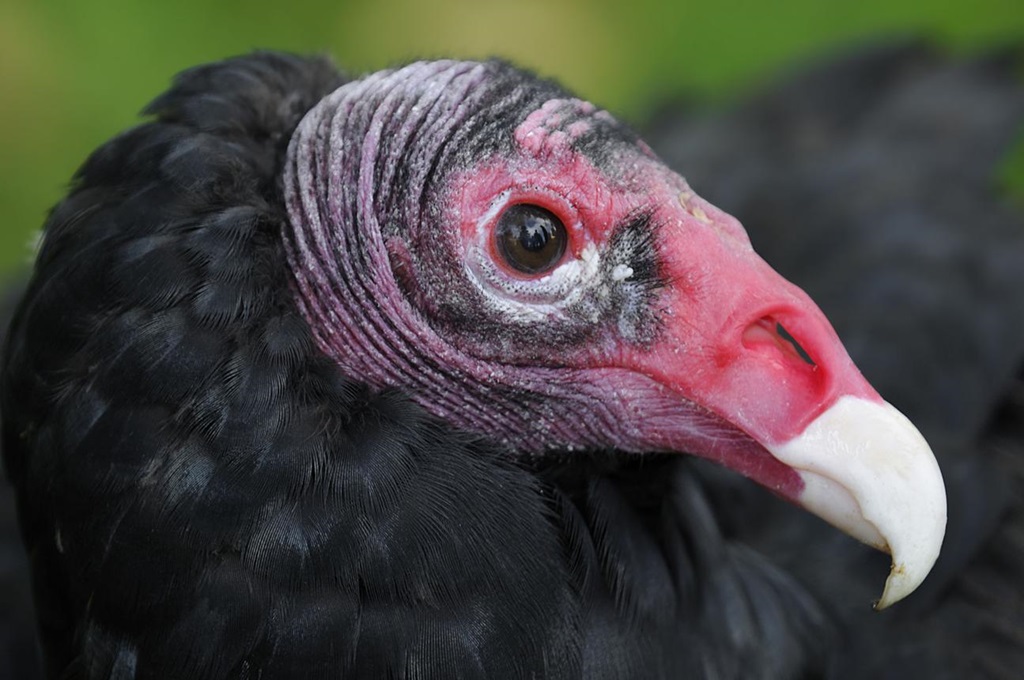
Feathers around the head could become badly soiled while feeding. Bare skin is much easier to keep clean.
Nature sometimes chooses practicality over good looks.
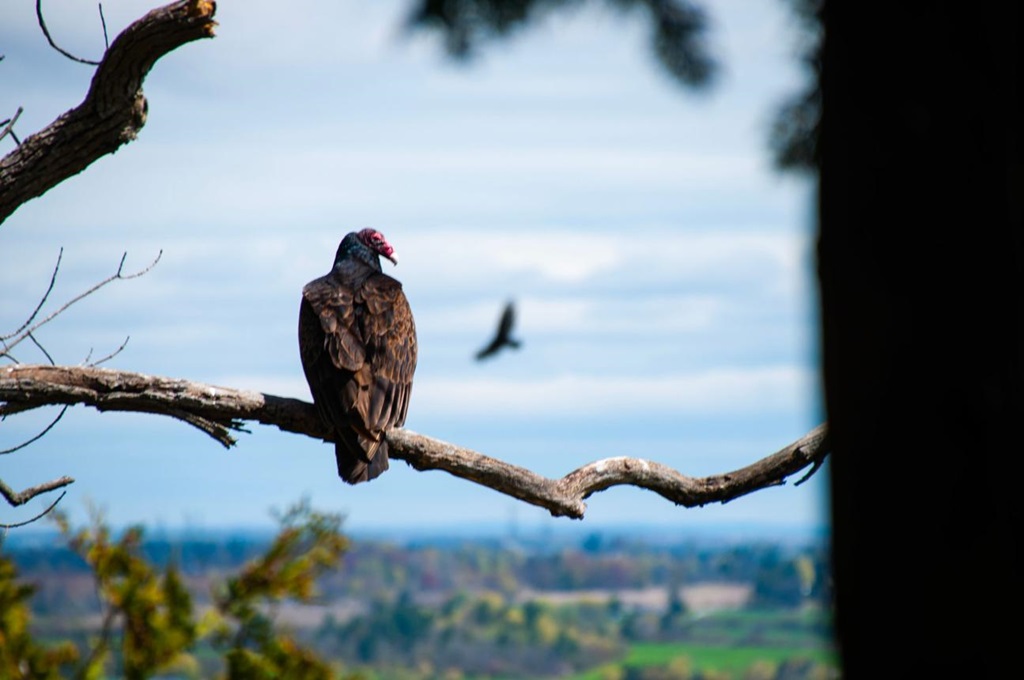
Turkey vulture near the Grand River
Something Smells Interesting
Turkey vultures possess one of their most remarkable abilities right under their noses.
They have an exceptionally well-developed sense of smell.
While many birds depend primarily on eyesight to locate food, turkey vultures can use scent to help find carrion, including food hidden beneath vegetation.
Once they find it, another remarkable part of their biology takes over.
Their digestive systems are adapted to consuming carrion containing microorganisms that would be dangerous to many other animals.
That makes the turkey vulture an important part of nature’s cleanup crew.
Dead animals disappear more quickly from the landscape, nutrients are recycled and potentially troublesome material is removed.
It may not be glamorous work.
But somebody has to do it.
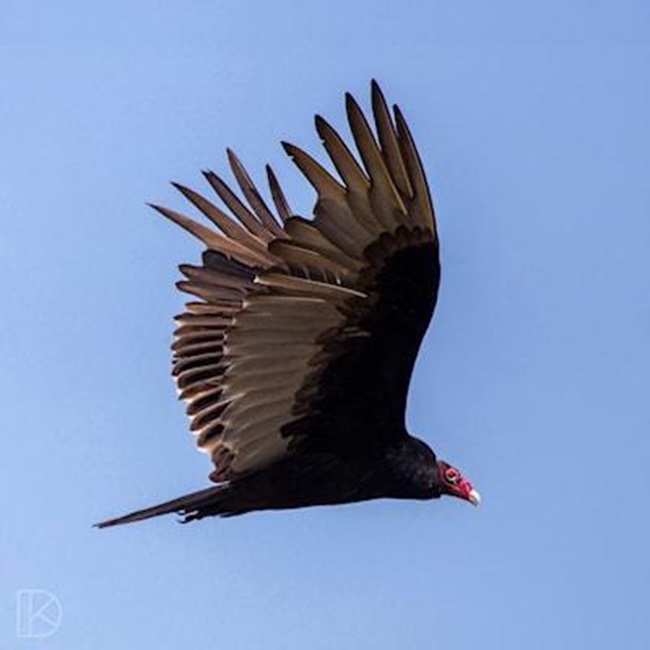
Turkey vulture in flight
Port Hope’s “Fishy Fast Food”
This brings us back to the Ganaraska River.
Every autumn, salmon travel upstream through Port Hope as part of their remarkable life cycle.
Not all of them survive.
For a scavenger, that creates an opportunity.
Turkey vultures gather along the Ganaraska to feed on dead salmon at roughly the same time that the birds are preparing for their own seasonal journey south.
The festival’s organizer, Caolaidhe Keelor, has watched this happen for years. The annual gathering helped inspire the idea of celebrating the vultures and using the occasion to change some of the misconceptions surrounding them.
Suddenly Kevin’s “fishy fast food” description becomes surprisingly accurate.
The salmon are making one journey.
The vultures are preparing for another.
And for a short period each autumn, those two natural events meet in downtown Port Hope.
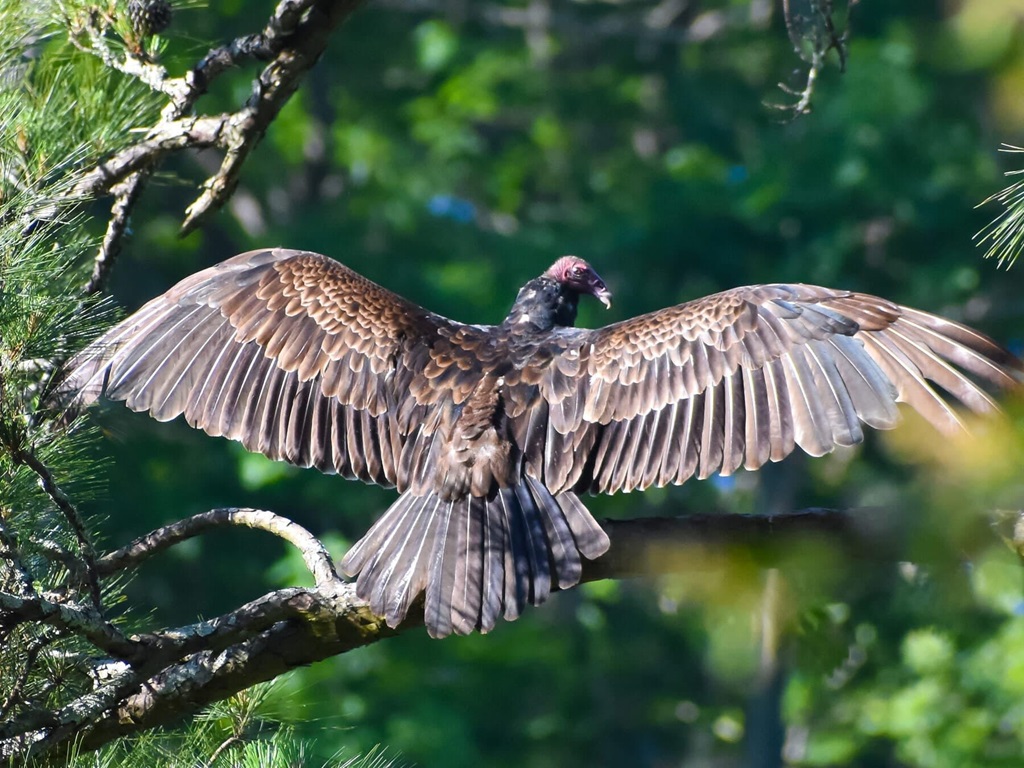
Turkey Vulture spreading its wings
Why Are They Circling Me?
There you are, walking peacefully through the Ontario countryside.
You look up.
One turkey vulture is circling overhead.
Then another.
And another.
Should you be concerned?
Almost certainly not.
They haven’t decided to wait for you to become lunch.
Turkey vultures are masters of energy-efficient flight.
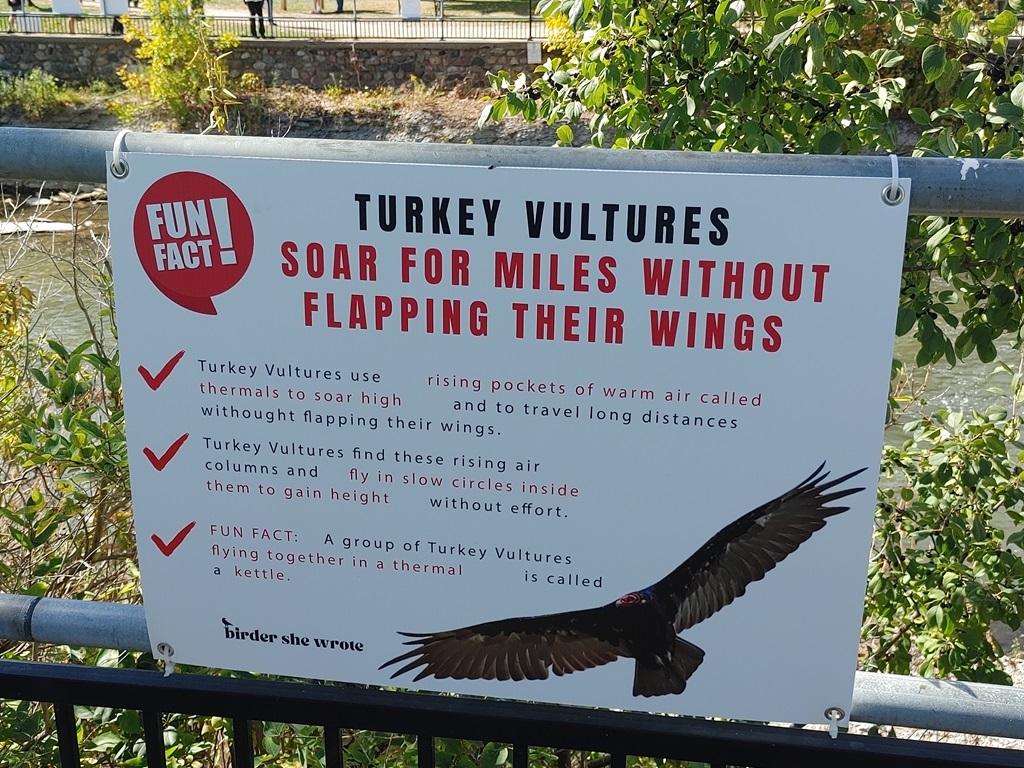
On sunny days, the ground warms the air above it. Columns of rising warm air, called thermals, form.
Turkey vultures find those thermals, spread their enormous wings and ride upward.
Once high enough, they glide toward the next useful current of rising air.
Watch carefully and you’ll notice something else.
Their wings are usually held in a shallow V, and the bird may appear to rock gently from side to side while soaring.
That combination is one of the easiest ways to recognize a turkey vulture high overhead.
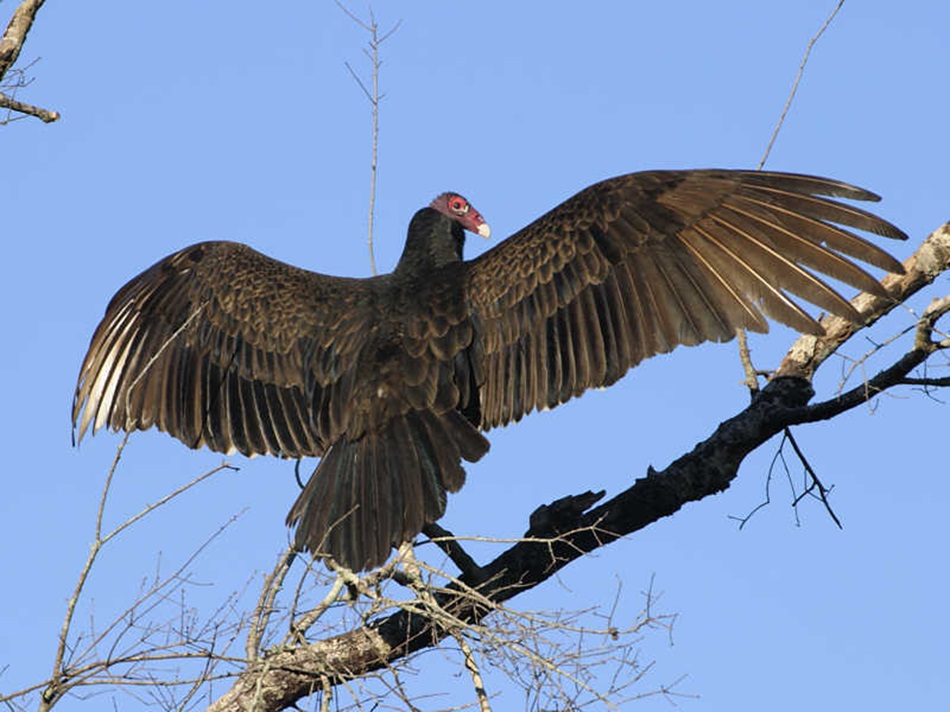
Turkey Vulture spreading its wings
Heading South
Many of the turkey vultures spending the warmer months in Ontario migrate south as autumn progresses.
And soaring becomes particularly useful when you have a long journey ahead.
Rather than constantly flapping their wings, vultures can use rising air currents to gain altitude and then glide, conserving valuable energy along the way.
That ungainly-looking bird sitting in a tree becomes something entirely different once it takes to the air.
Turkey vultures can be remarkably graceful.
Perhaps they simply look better from a distance.
A Face Only Nature Could Love
We should probably discuss the head.
There really is no avoiding it.
An adult turkey vulture has a red, wrinkled, featherless head.
Nobody is likely to mistake one for a chickadee.
But once again, what looks peculiar to us makes perfect sense for the bird.
A featherless head is much easier to keep clean when your meals involve putting your head into a carcass.
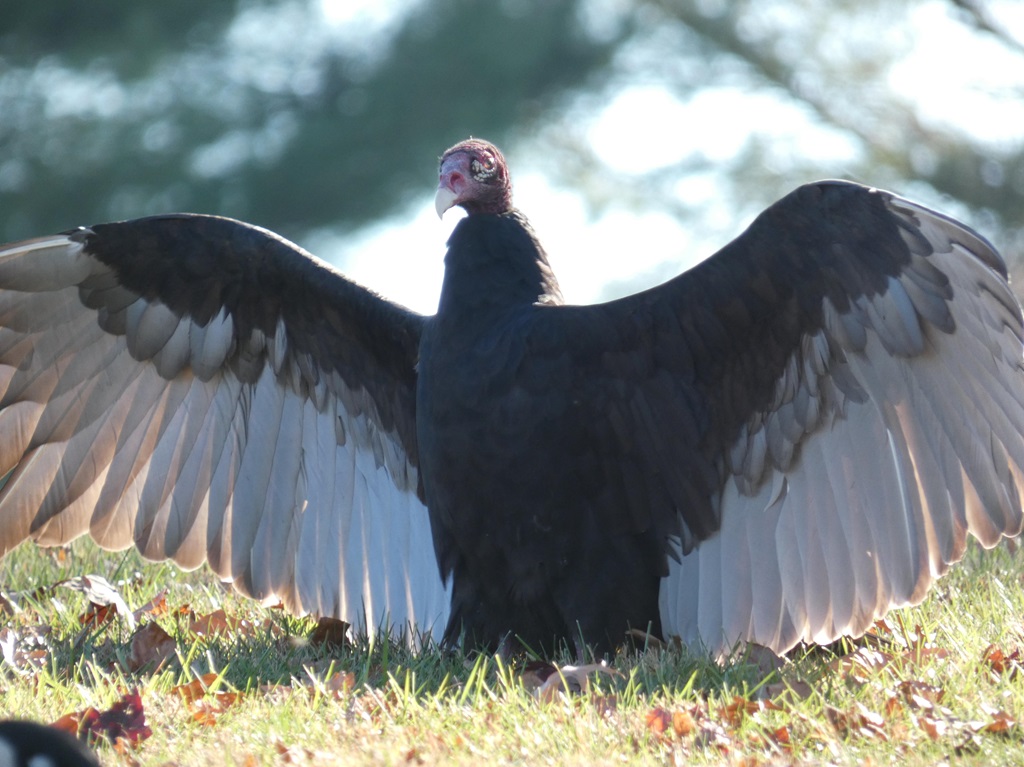
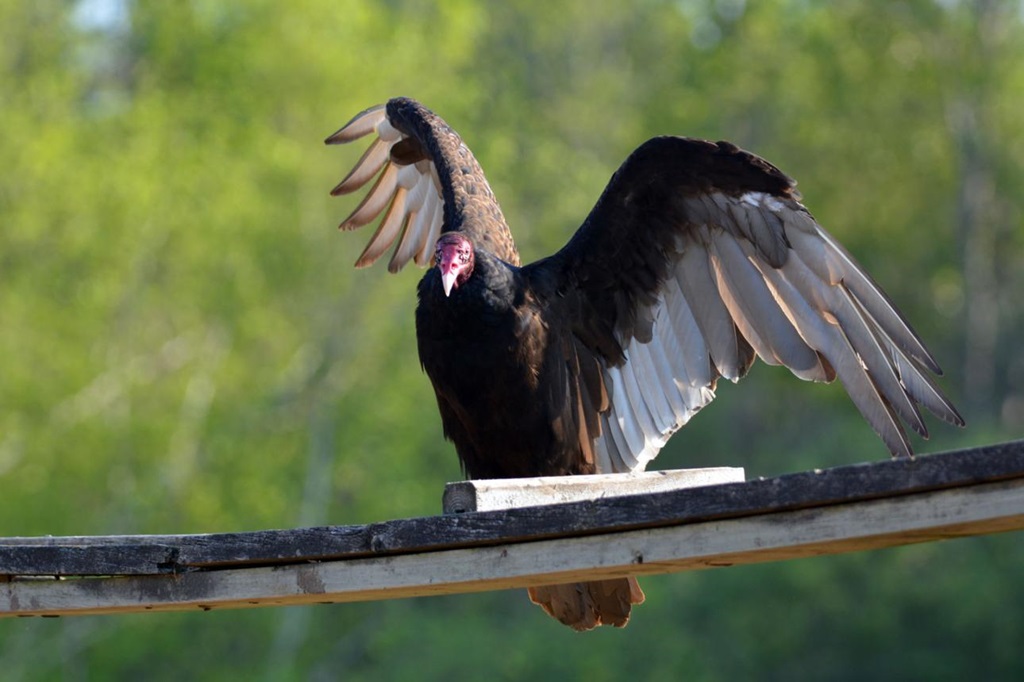
You might also see a turkey vulture perched with its enormous wings spread wide.
It can look wonderfully dramatic — almost as though the bird knows someone has a camera pointed at it.
The behaviour can help with warming and drying.
But if you happen to be taking its photograph, there’s no harm in pretending it’s posing for you.
Turkey vulture roosting
Are Turkey Vultures Dangerous?
Their reputation suggests that they ought to be.
Reality is considerably less dramatic.
Turkey vultures are primarily scavengers. Unlike hawks and eagles, they don’t possess the same kind of powerful feet and talons designed for capturing substantial live prey.
They would much rather find dinner already prepared.
That means the turkey vulture soaring above your backyard isn’t plotting an attack on you.
Nor is it likely sizing up the family dog.
It’s probably doing what turkey vultures have been doing for generations — searching the landscape for its next meal while taking advantage of the air currents carrying it along.
An Unlikely Environmental Worker
Imagine what would happen if nothing ate animals that died naturally in forests, fields and along roadsides.
Nature has its own recycling system.
Scavengers are part of it.
Turkey vultures remove carrion from the environment and return nutrients to the ecosystem.
They perform this service every day without garbage bags, collection schedules or municipal budgets.
Perhaps we shouldn’t call them ugly.
Maybe we should call them essential workers.
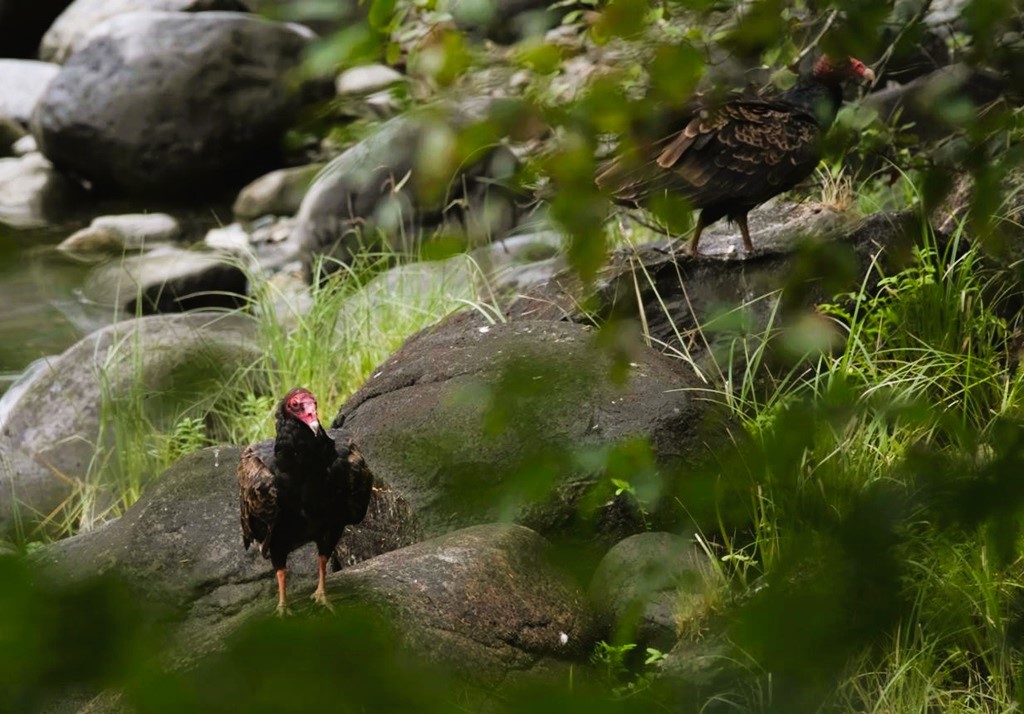
Turkey vulture near the Grand River
Why Hold a Turkey Vulture Festival?
Now the idea doesn’t seem quite so strange.
The Turkey Vulture Festival isn’t simply about celebrating an unusual-looking bird.
It’s an opportunity to use something happening naturally in Port Hope to encourage people to learn about wildlife, conservation, migration, rivers and ecosystems.
It also illustrates something important about tourism.
Not every visitor experience has to be invented.
Sometimes the experience is already happening.
You simply have to notice it.
Port Hope already had the Ganaraska River.
It already had the salmon run.
It already had migrating turkey vultures gathering along the river.
Someone simply looked up and realized there was a story worth telling.
From “Yuck!” to “Wow!”
Perhaps that’s the turkey vulture’s greatest trick.
The more you learn about one, the more interesting it becomes.
It eats dead animals?
Yuck.
It can locate carrion partly through its extraordinary sense of smell?
Interesting.
It uses rising warm air to travel long distances while barely flapping its wings?
Very interesting.
It removes dead animals from the environment?
Important.
It gathers along the Ganaraska River while preparing for its autumn migration?
Now you have the beginnings of a festival.
Sometimes changing how people feel about wildlife begins simply by helping them understand it.
Turkey Vulture spreading its wings
Did You Know?
Turkey vultures aren’t great singers. Their vocal abilities are limited, so you’re more likely to hear hissing or grunting than a beautiful bird song.
A group of vultures can have some wonderfully colourful names. Vultures gathered together at rest are sometimes called a committee, while a group feeding together may be called a wake.
Their soaring style provides an excellent identification clue. Look for broad wings held in a shallow V and a slightly rocking flight.
And although they may look imposing, turkey vultures would generally much rather scavenge than hunt.
Grand River turkey vulture
The Next Time You See One — Look Up
Kevin and Joanne went to Port Hope’s first Turkey Vulture Festival to see what this unusual new event was all about.
They found crowds, conservation organizations, wildlife displays, music and, yes, a few turkey vultures overhead.
Perhaps that is ultimately what makes an event like this worthwhile.
Some people may have arrived for the music.
Others may have come to see the salmon.
Some probably came simply because they had never heard of a Turkey Vulture Festival before.
But perhaps a few went home looking at the large black bird circling above Port Hope a little differently.
The next time you see one soaring above an Ontario highway, farm, forest or river, take another look.
Notice those enormous wings.
Watch how effortlessly it rides the air.
Remember the rather unpleasant but important job it performs.
The turkey vulture may never win Ontario’s cutest bird competition.
It probably doesn’t care.
It has more important work to do.
And now, in Port Hope, it even has a festival.
NOTE:
The biological details in the companion portion are consistent with the Cornell Lab’s species account: turkey vultures eat carrion, locate carcasses partly through their keen sense of smell, soar on thermals and characteristically hold their wings in a V. All About Birds The Port Hope connection is also unusually strong: festival organizer Caolaidhe Keelor has described vultures gathering along the Ganaraska during the salmon run to eat dead salmon before their southward migration. kawarthaNOW