











Movies Under the Stars
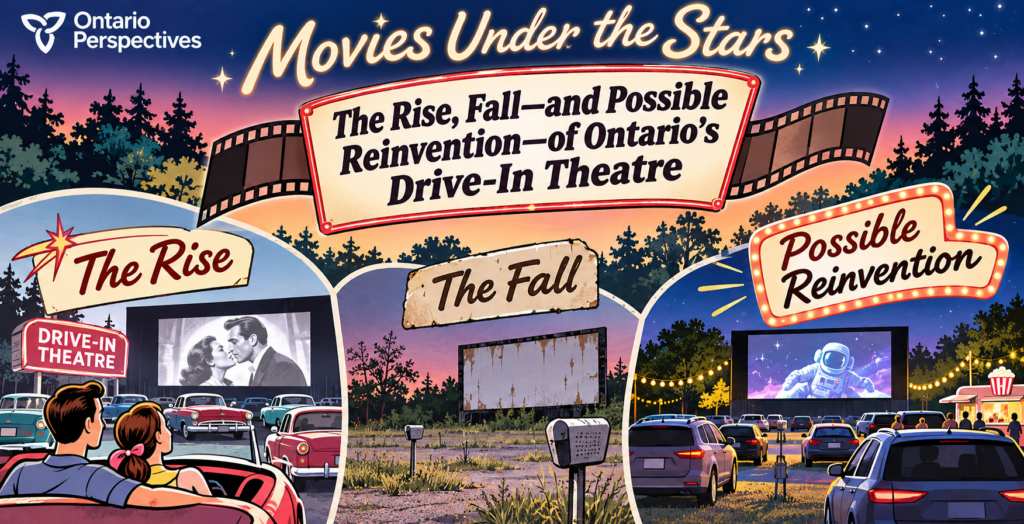
The Rise, Fall—and Possible Reinvention—of Ontario’s Drive-In Theatre
ONTARIO PERSPECTIVES
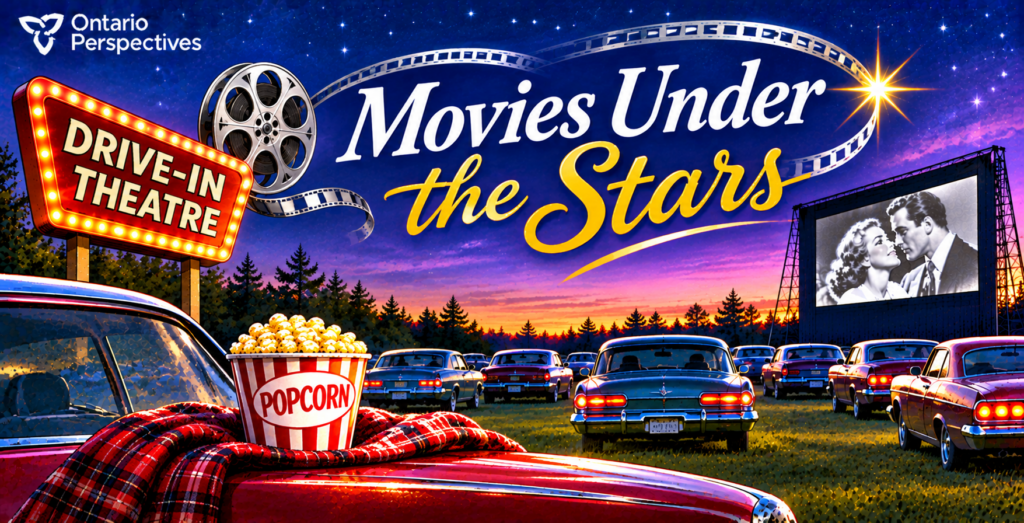
There was a time when going to the movies meant packing the kids into the family station wagon, throwing a few blankets in the back, driving through a little booth and searching for the perfect parking spot in front of an enormous outdoor screen.
Dad parked.
Mom unpacked the snacks.
The kids headed for the playground.
Someone hung a little metal speaker on the car window.
And eventually, after the sun finally disappeared, the screen flickered to life.
Welcome to the drive-in.
For generations of Ontarians, the drive-in theatre wasn’t simply somewhere to watch a movie. It was a family outing, a teenage rite of passage, a first date, a late-night adventure and sometimes—if we’re being truthful—a place where the movie wasn’t necessarily the main attraction.
Today, most of Ontario’s drive-ins have disappeared.
But a surprising number are still showing movies beneath the stars.
Perhaps even more surprisingly, this wonderfully old-fashioned form of entertainment may have a future.
It just might not look exactly like the drive-in we remember.
Executive Summary
Ontario holds a special place in Canadian drive-in history. Canada’s first drive-in theatre opened in Stoney Creek, Ontario, in 1946, beginning a love affair between automobiles and movies that would last for decades.
Drive-ins flourished during the postwar years. Cars became more affordable, suburbs expanded and young families wanted inexpensive entertainment. The drive-in offered something an indoor cinema couldn’t: privacy, informality and enough room to bring the children along—sometimes already dressed in their pyjamas.
By the late 20th century, however, valuable land, multiplex cinemas, home video, cable television and eventually streaming services were changing the entertainment landscape. Many familiar Ontario screens disappeared.
Yet the drive-in never completely died.
Ontario still has operating drive-in theatres, and the COVID-19 pandemic unexpectedly demonstrated just how adaptable the idea could be. Drive-ins became places for movies, concerts and other physically distanced events.
Perhaps that provides a clue to their future.
Tomorrow’s drive-in may combine movies with live entertainment, food, festivals, classic-car nights, tourism experiences and community events.
The technology will change.
The cars will change.
The entertainment may change.
But one essential ingredient will remain exactly the same:
Wait until dark.
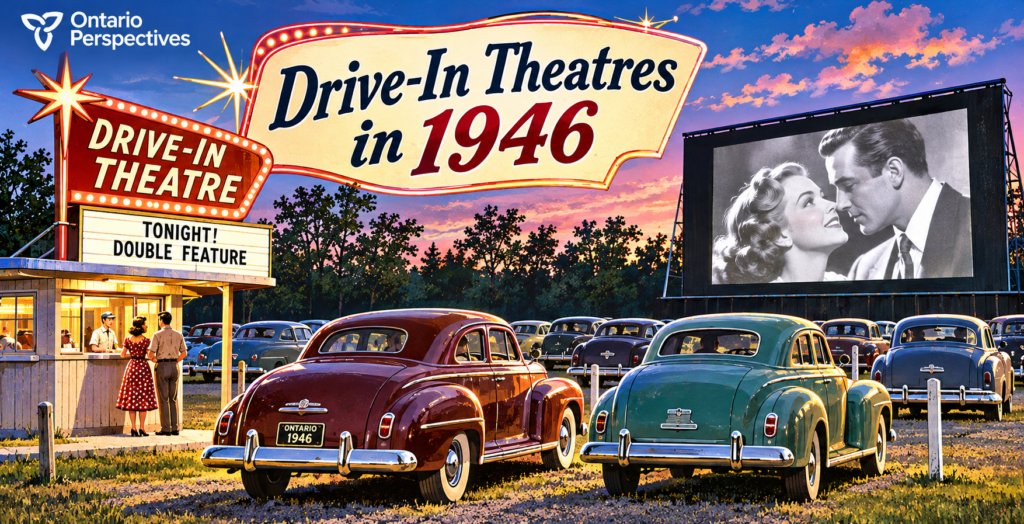
It Started With a Car, a Projector and a Problem
The drive-in theatre didn’t begin in Ontario.
Its commonly recognized inventor was an American named Richard Hollingshead Jr.
According to the Smithsonian, Hollingshead experimented in his New Jersey driveway with a projector mounted on a car and a screen improvised between trees. One challenge was ensuring that people parked behind other vehicles could still see the screen. His solution involved arranging cars on raised ramps.
He patented his concept and opened a drive-in theatre in Camden, New Jersey, on June 6, 1933.
Admission was 25 cents per car and another 25 cents per person.
The idea was clever.
But it took the combination of better sound technology, postwar prosperity and North America’s growing love affair with the automobile to turn the drive-in into a cultural phenomenon.
And Canada was about to join the show.
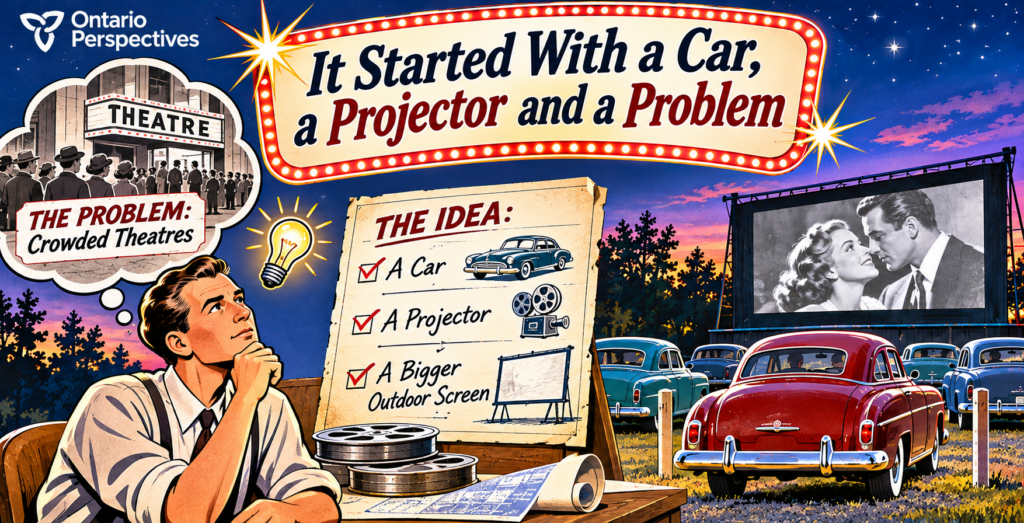
Canada’s Drive-In Story Starts in Ontario
On July 10, 1946, Canada’s first drive-in cinema opened in Stoney Creek, Ontario, east of Hamilton.
It was called the Skyway Drive-In.
Its screen reportedly measured an enormous 100 feet by 50 feet.
There was another interesting difference between that early theatre and the drive-ins many people remember today.
The sound initially came from speakers rather than from the car radio. In-car speaker systems became a familiar part of the classic drive-in experience, with individual speakers mounted on posts beside parking spaces.
Eventually FM radio would make those speakers largely unnecessary.
But in 1946, the whole experience must have seemed remarkably futuristic.
Drive your automobile to the theatre.
Stay inside.
Watch a gigantic movie screen.
No theatre seat required.
Ontario had discovered movies on wheels.
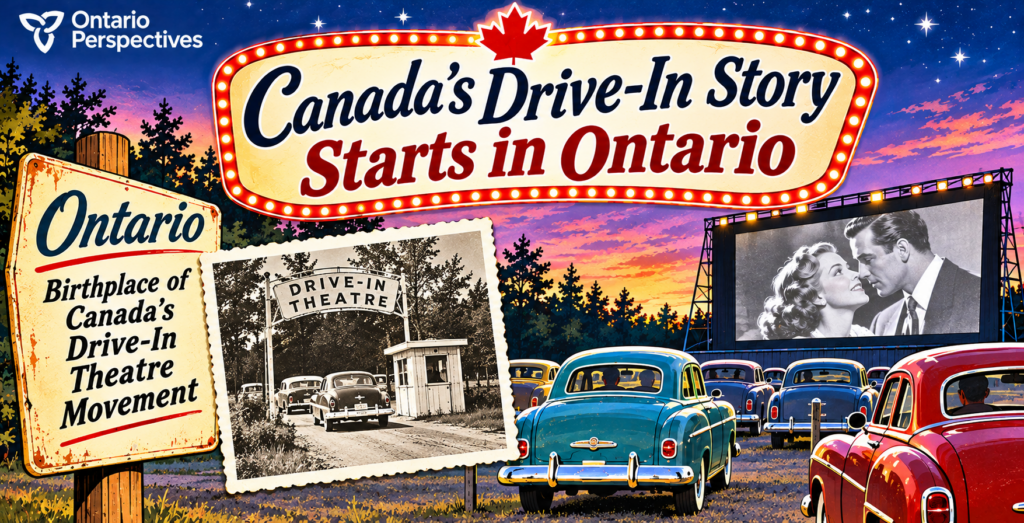
Then Everybody Wanted One
The idea spread quickly.
Statistics Canada recorded just seven drive-in theatres across Canada in 1947.
Four years later, in 1951, there were 82, with space for more than 40,000 cars. Paid attendance that year exceeded 6.5 million.
The timing couldn’t have been better.
The Second World War was over. The Baby Boom had begun. Families were moving into growing suburbs. Automobile ownership was increasing.
The drive-in fit this new lifestyle almost perfectly.
You didn’t need a babysitter.
Bring the children.
Put them in their pyjamas.
Let them play until the movie begins.
If the baby cries, nobody three rows away complains.
And when the children finally fall asleep in the back seat?
Mom and Dad can finish watching the movie.
It was family entertainment designed around the automobile.
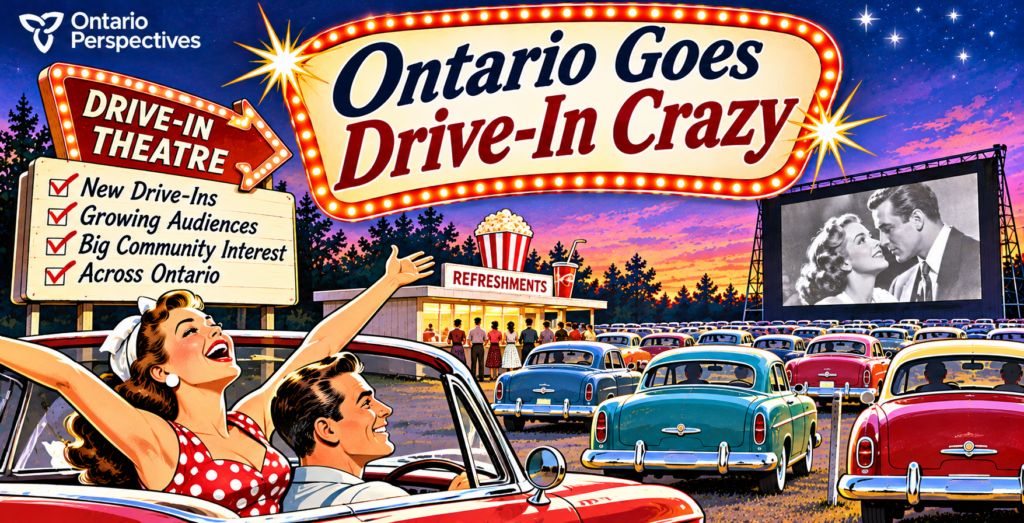
Ontario Goes Drive-In Crazy
Soon giant movie screens appeared beside highways and on the edges of communities throughout Ontario.
Ottawa’s first drive-in opened in July 1948.
Opening night attracted an estimated 1,000 cars, and seven police officers were reportedly required to manage traffic. Some disappointed customers had to be turned away.
Imagine creating that kind of traffic jam for a movie today.
Drive-ins appeared around Toronto, Hamilton, Niagara, London, Ottawa, Sudbury and in communities throughout the province.
Their names often seemed perfectly suited to a night beneath the stars:
Skyway.
Starlite.
Stardust.
Skylight.
Sunset.
Even the names promised something magical after dark.
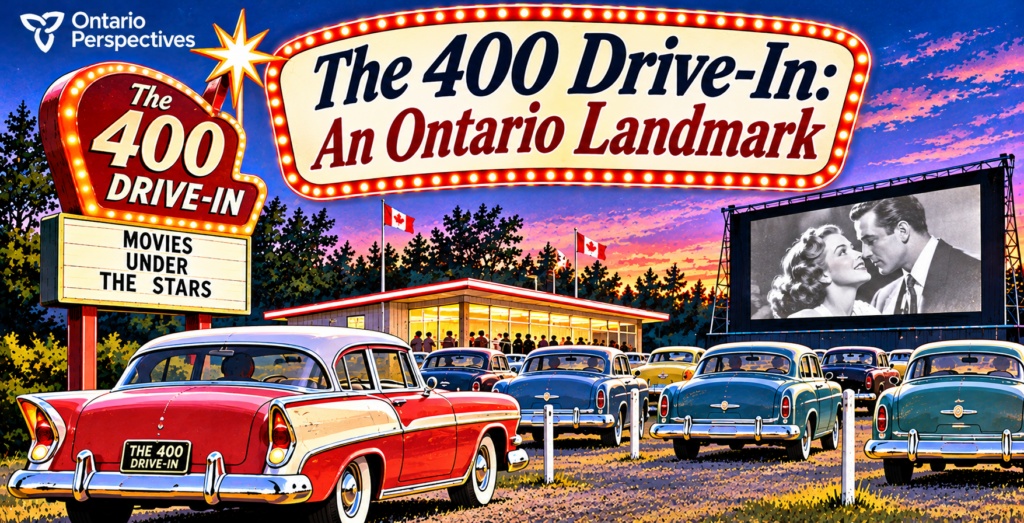
The 400 Drive-In: An Ontario Landmark
For motorists travelling through the Toronto area, one drive-in became particularly recognizable.
The 400 Drive-In, located near Highways 400 and 7 in Vaughan, opened in 1954.
Originally a single-screen theatre, it eventually expanded to three screens and could accommodate well over 1,000 cars.
For decades its giant screens were familiar landmarks to people travelling Highway 400 toward cottage country.
But the location also illustrates one of the great problems facing drive-ins.
Drive-in theatres require something developers love:
land—and lots of it.
The 400 Drive-In closed in 1997 and was demolished. The site was redeveloped for the Colossus movie theatre complex and other commercial uses.
The movies remained.
The cars remained.
But the drive-in disappeared.
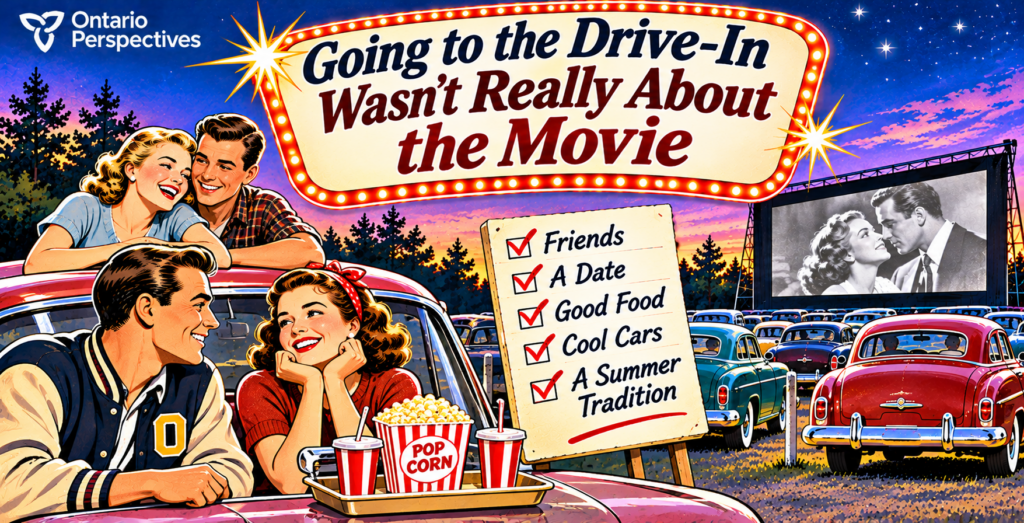
Going to the Drive-In Wasn’t Really About the Movie
Ask someone who grew up going to drive-ins what movie they saw.
They may not remember.
Ask about the experience?
That’s different.
They may remember everything.
The smell of popcorn drifting from the concession stand.
The playground beneath the giant screen.
The line of cars waiting at the entrance.
The mosquitoes.
The windows fogging up.
The intermission countdown.
The long walk to the concession stand in the dark.
And, of course, the speaker.
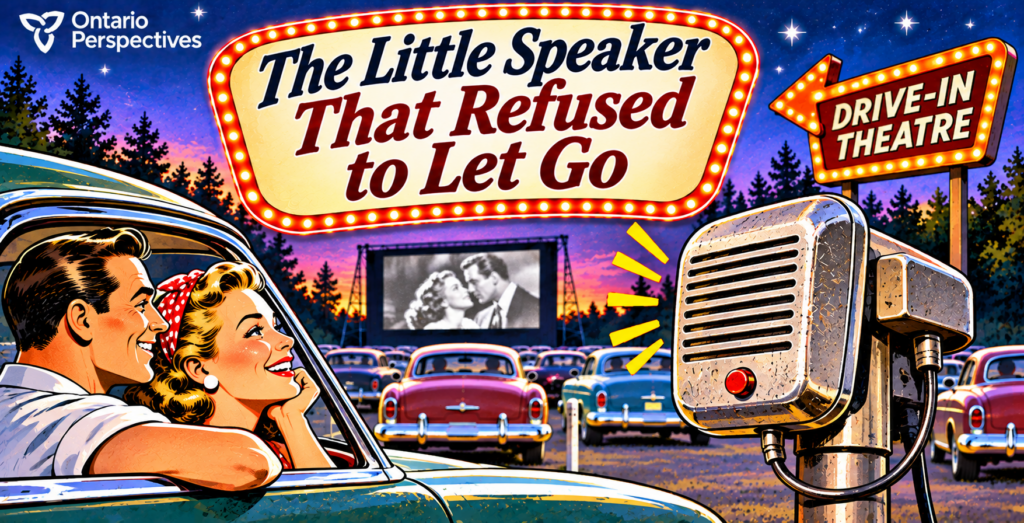
The Little Speaker That Refused to Let Go
For many years, each parking space had its own metal speaker attached to a post.
You rolled down the window slightly, hung the speaker inside and adjusted the volume.
Simple.
There was just one problem.
At the end of the evening, people occasionally forgot to put it back.
The St. Catharines Museum notes that patrons at local drive-ins had to be reminded not to drive away with the speaker still attached to their cars.
One can imagine the sequence:
Start engine.
Put car in gear.
Drive forward.
CLUNK!
A small piece of the drive-in theatre is suddenly attempting to follow you home.
Eventually technology solved the problem.
Modern drive-ins generally broadcast the movie soundtrack through FM radio.
No speaker pole.
No dangling wire.
No embarrassing clunk.
Progress.
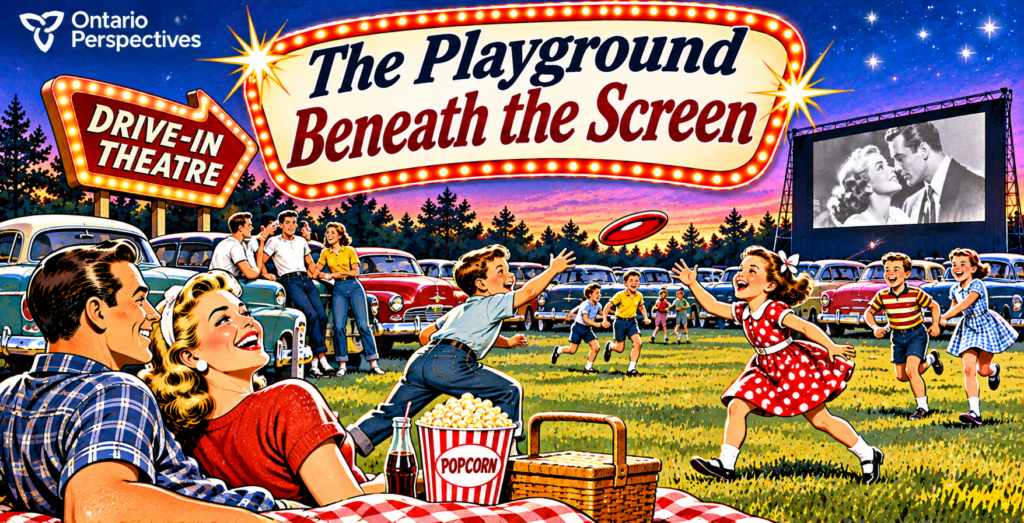
The Playground Beneath the Screen
For children, the movie sometimes came second.
Many drive-ins had playgrounds near the screen.
The former Lakeshore Drive-In in St. Catharines had swings, while Oxford County’s drive-in eventually installed playground equipment that included something memorably described as the Loch Ness Monster.
Children could play while their parents waited for darkness.
Then came the announcement.
The movie was about to begin.
Suddenly dozens of children had to find their way back to dozens of nearly identical cars.
Hopefully the right one.
The Snack Bar Was Half the Adventure
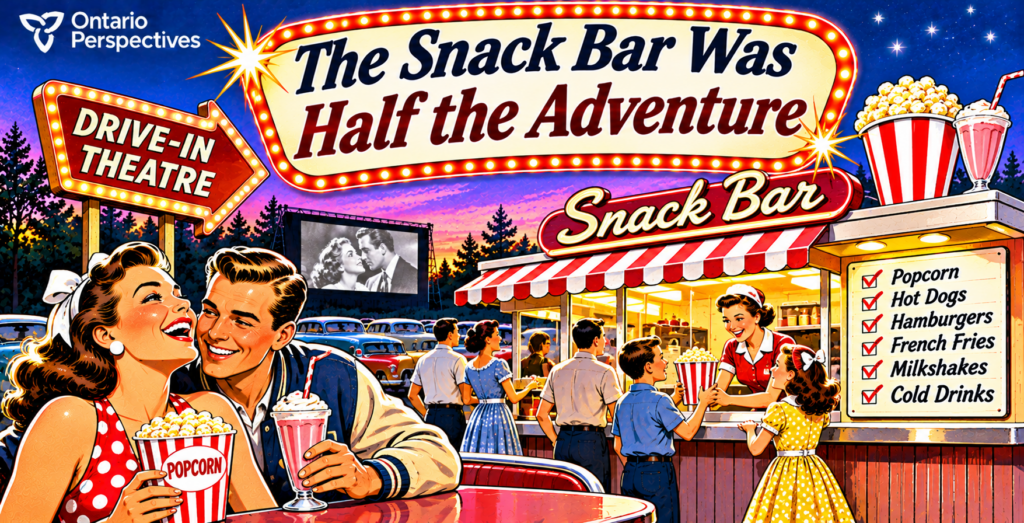
Popcorn may have been mandatory, but drive-in food could go well beyond popcorn.
Hamburgers.
Hot dogs.
French fries.
Ice cream.
Candy.
Soft drinks.
And sometimes pizza.
The concession stand wasn’t merely somewhere to buy food.
It was the drive-in’s social centre.
During intermission, people emerged from their cars and converged on it.
Teenagers checked to see who else was there.
Children negotiated for one more treat.
Parents stood in line wondering how something advertised as an inexpensive family evening had somehow resulted in purchasing dinner twice.
Then the countdown appeared on the screen.
Five minutes until showtime.
Everybody headed back to the cars.
About Those Teenagers…
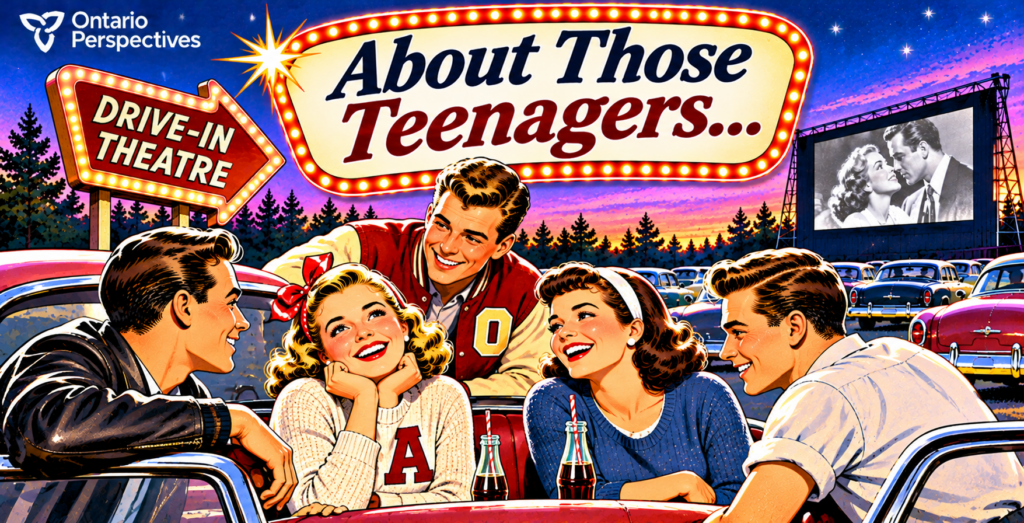
The drive-in had another audience.
Teenagers.
Especially teenagers with cars.
Especially teenagers with dates.
Drive-ins offered something the traditional movie theatre couldn’t provide:
Privacy.
That resulted in the drive-in acquiring some colourful nicknames over the years.
One of the better known was the “passion pit.”
There is probably no need for Ontario Perspectives to investigate the subject much further.
Let’s simply say that occasionally the movie may have been playing to an audience that wasn’t giving it their complete attention.
The Great Drive-In Tricks
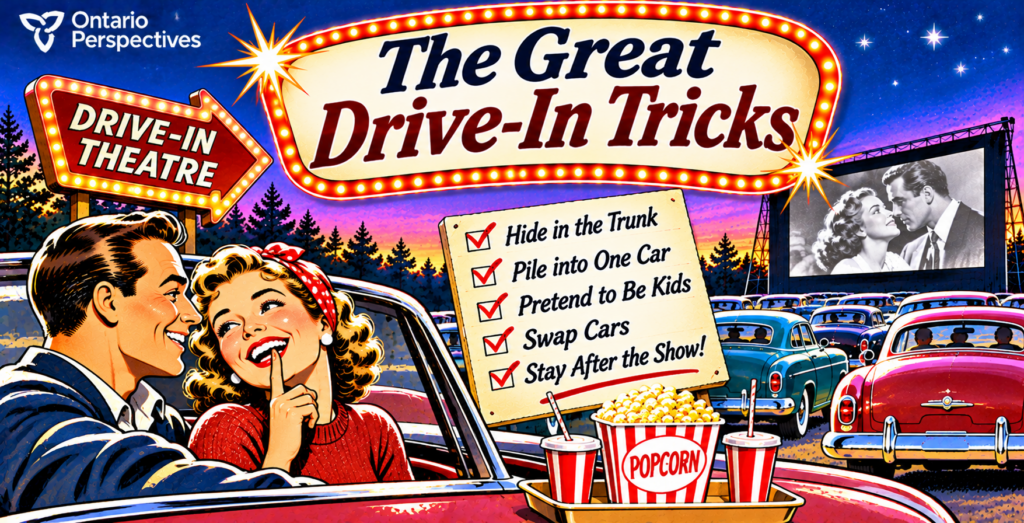
Then there were the money-saving schemes.
One of the oldest involved admission prices.
If admission was charged by the person rather than by the vehicle, a car containing five teenagers could suddenly appear to contain only two.
Where did everybody else go?
The trunk.
Stories about people sneaking friends into drive-ins inside car trunks became part of drive-in folklore.
It probably wasn’t particularly comfortable.
It certainly wasn’t safe.
And once inside, there remained one significant problem:
How exactly do you climb casually out of a car trunk without attracting attention?
Perhaps it seemed like a better plan when it was first discussed.
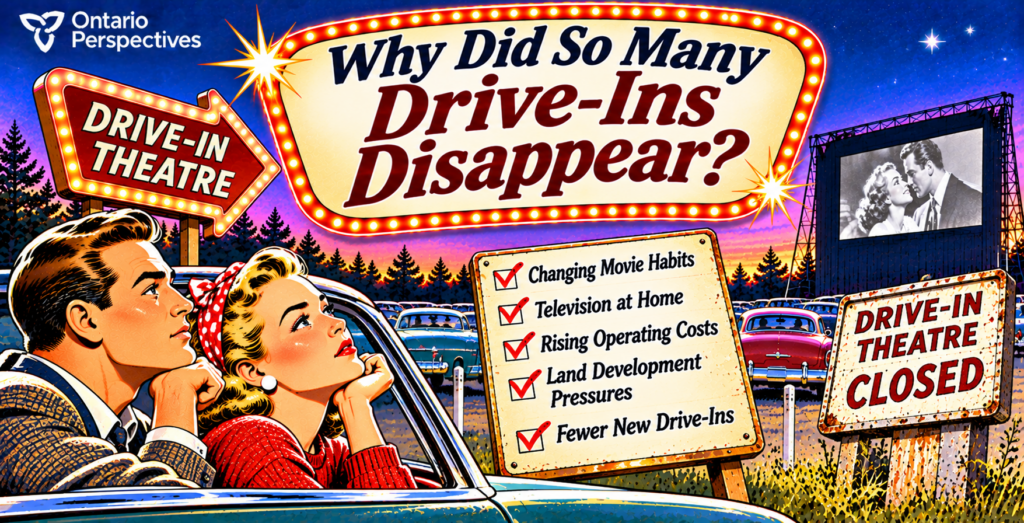
Why Did So Many Drive-Ins Disappear?
There wasn’t one single villain.
Instead, the world around the drive-in changed.
Television improved.
Then came cable TV.
Then VHS and video rental stores.
Indoor multiplexes offered multiple movies, air conditioning and comfortable seating.
Eventually home theatres and streaming services made thousands of movies available without leaving the living room.
But another problem was even harder to overcome.
Land.
A drive-in needs acres of it.
When a drive-in originally opened on the outskirts of town, the land might have been relatively inexpensive.
Then the town grew.
Subdivision by subdivision, shopping centre by shopping centre, development moved closer.
Suddenly those acres of parking spaces were extremely valuable real estate.
An outdoor theatre operating mainly at night during the warmer months had to compete economically with the value of the land beneath it.
Many couldn’t.
One by one, the giant screens went dark.
But Ontario’s Drive-In Didn’t Die
That is perhaps the most interesting part of the story.
Drive-ins survived.
A specialist database currently records 19 Ontario drive-ins as open, although counts vary depending upon definitions and seasonal operating status.
Among the familiar surviving names are theatres in communities such as Oakville, Stoney Creek, Grand Bend, Newmarket, Oro-Medonte, Pembroke, Fonthill and elsewhere across the province.
At Grand Bend’s Starlite Drive-In, for example, movies are still being advertised for late September 2026.
The experience has changed technologically.
Digital projection has replaced reels of film.
FM radio has replaced those metal window speakers.
Online information has replaced checking the newspaper for showtimes.
But when the movie begins, something wonderfully old-fashioned still happens.
Everyone looks through the windshield at a gigantic screen beneath the night sky.
Then Came 2020
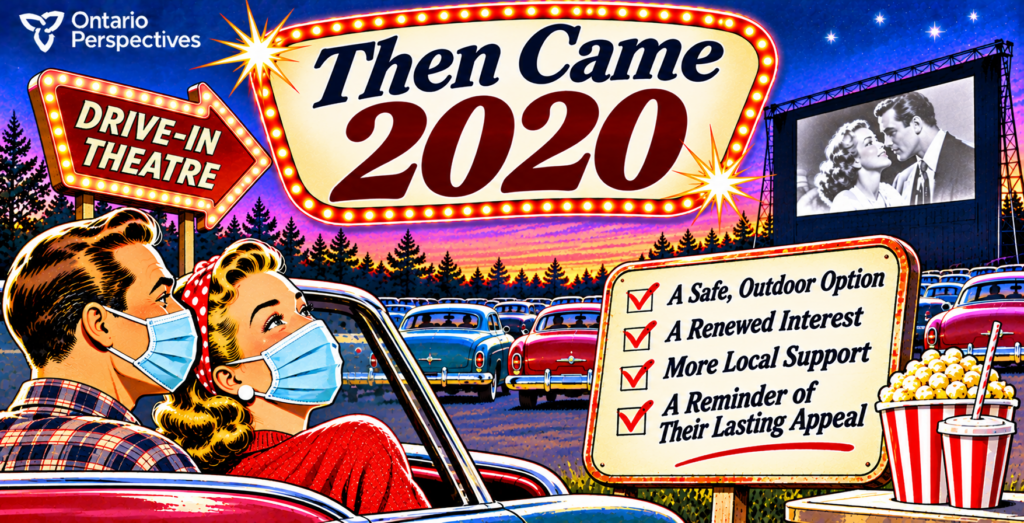
For decades, people had been predicting the eventual death of the drive-in.
Then the world suddenly discovered that sitting inside your own automobile had one enormous advantage.
You were separated from everyone else.
During the COVID-19 pandemic, Ontario permitted drive-in cinemas and drive-in forms of entertainment under conditions that allowed people to remain physically separated inside their vehicles.
Suddenly an entertainment format invented in the 1930s seemed remarkably appropriate for the 2020s.
Ontario Place created an outdoor cinema program that hosted as many as 185 vehicles. During 2020 it presented 84 films to 22,750 drive-in visitors, along with reimagined film festivals and other drive-in and drive-through entertainment.
Existing Ontario drive-ins also experienced renewed interest.
Movies weren’t the only attraction.
Drive-in concerts appeared.
Performances moved outdoors.
Temporary screens appeared in parking lots.
An entertainment format that had been declared old-fashioned suddenly demonstrated something important.
It could adapt.
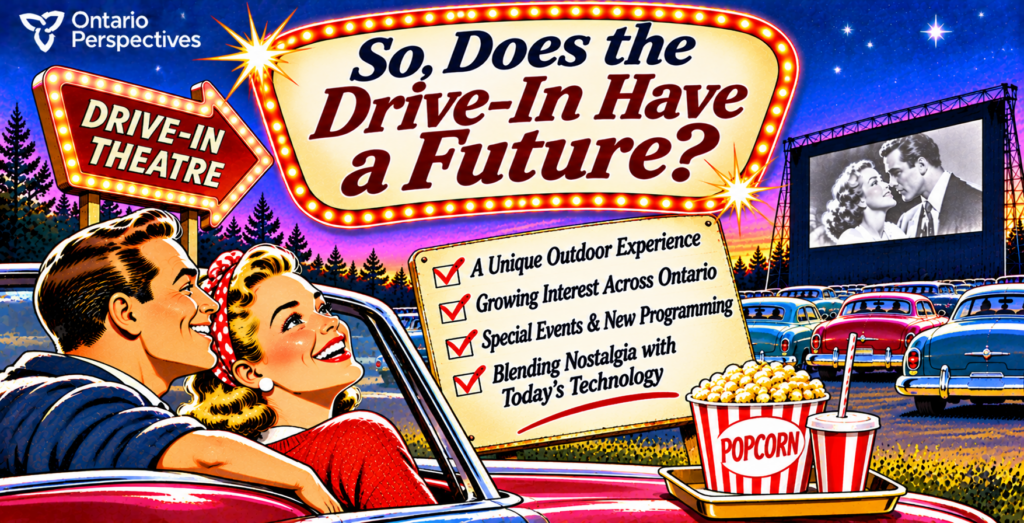
So, Does the Drive-In Have a Future?
We think it does.
But perhaps the better question is:
What is a drive-in?
If the answer is simply a parking lot where people watch a movie, its future may be limited.
But suppose the answer is:
An outdoor entertainment space where the automobile becomes your private viewing area.
Now things become interesting.
Imagine the Ontario drive-in of the future.
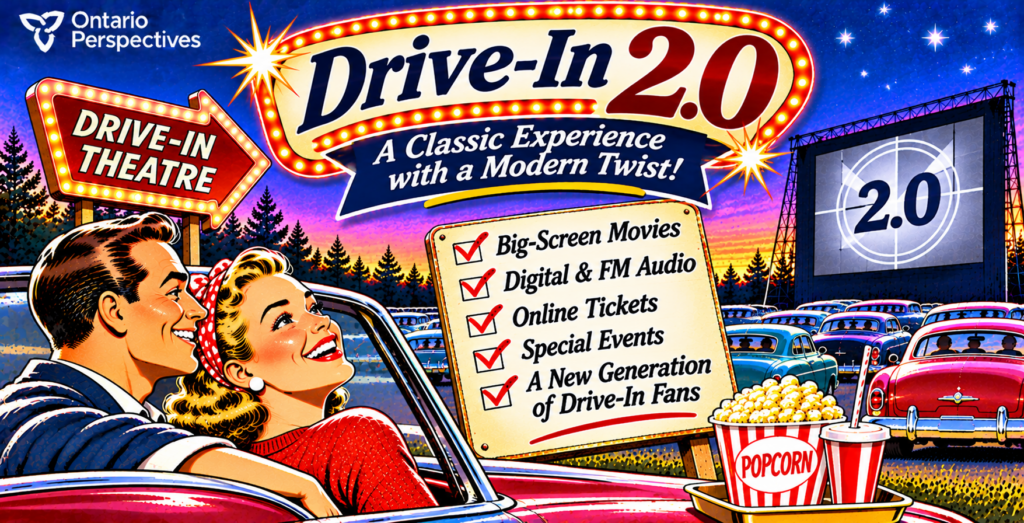
Drive-In 2.0
The giant screen remains.
So does the popcorn.
But movies become only part of the experience.
Classic-Car Movie Nights
Imagine arriving in a 1957 Chevrolet to watch a movie from the 1950s.
The cars themselves become part of the show.
Classic-car clubs, vintage trailers and automobile museums could help turn an ordinary movie night into a tourism experience.
Ontario Movie Nights
Why not celebrate films made in Ontario or movies featuring recognizable Ontario locations?
Add local food vendors and tourism information, and movie night becomes an Ontario experience.
Drive-In Concerts
The pandemic demonstrated that live performances can work in drive-in settings.
A stage beneath the screen could accommodate musicians, comedians or theatrical performances before the film begins.
Farm-to-Screen Nights
This could be particularly interesting in rural Ontario.
Partner with local farms, farmers’ markets and food producers.
Come early.
Visit the vendors.
Buy dinner.
Meet local producers.
Then settle into the car for the movie.
Festivals and Community Celebrations
A drive-in site could host more than entertainment after dark.
During the day, that enormous parking area might accommodate markets, festivals, craft shows, antique shows, food events or community celebrations.
Interactive Movie Nights
Imagine watching Grease surrounded by classic cars.
A Christmas movie during a holiday light experience.
A horror movie during a Halloween event.
A family movie preceded by children’s activities.
The movie becomes the finale rather than the entire attraction.
And Then There Are Electric Cars
Here is an interesting twist nobody at the Skyway Drive-In in 1946 could have imagined.
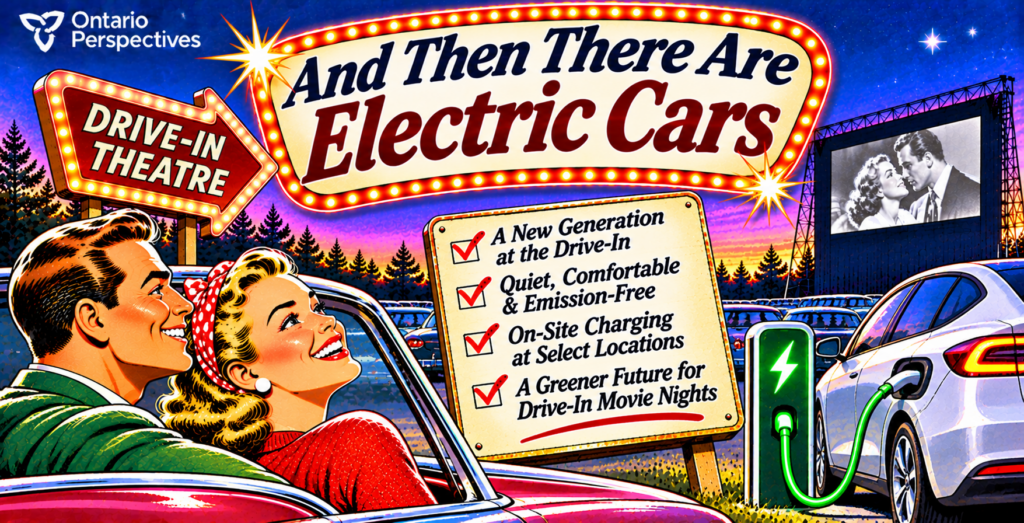
The future drive-in customer may arrive in an electric vehicle.
That creates possibilities.
Could future drive-ins provide EV charging spaces?
Could solar canopies shade cars during daytime events while generating electricity?
Could an app deliver the soundtrack directly to vehicle entertainment systems?
Could food be ordered from the car and delivered to the parking space?
Technology doesn’t necessarily have to destroy the drive-in.
It might help reinvent it.
But Please Keep the Popcorn
Some things shouldn’t change.
The screen still needs to be enormous.
The movie still shouldn’t start until it’s dark.
There should still be an intermission.
Children should occasionally be allowed to attend in their pyjamas.
Someone should order far too much food.
And there should always be that wonderful moment when the previews end, the cars grow quiet and hundreds of people look toward the same glowing screen.
Because that is the secret of the drive-in.
It isn’t really about watching a movie.
We can watch movies anywhere.
It’s about going to the drive-in.

Did You Know?
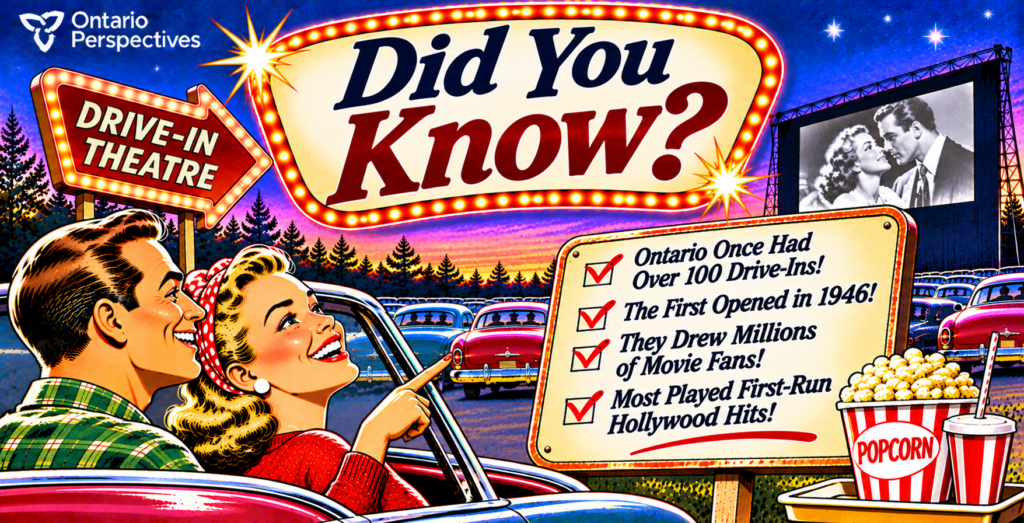
Canada’s first drive-in theatre opened in Stoney Creek, Ontario, in 1946.
Canada went from only 7 drive-in theatres in 1947 to 82 by 1951.
Ottawa’s first drive-in reportedly attracted about 1,000 cars on opening night in 1948, creating such a traffic problem that police were needed.
The old 400 Drive-In in Vaughan eventually had three screens and room for more than 1,000 automobiles.
Early drive-ins used individual speakers that hung inside car windows. Forgetting to remove one before leaving could result in a rather memorable departure.
Drive-ins often included playgrounds because children were an important part of the business.
During the COVID-19 pandemic, the supposedly old-fashioned drive-in became one of the few forms of communal entertainment particularly suited to physical distancing.
And yes, sneaking friends into a drive-in inside the trunk really did become part of drive-in folklore.
We don’t recommend trying it.
One Last Picture Show
Somewhere in Ontario tonight, as darkness falls, cars will begin pulling into a large field.
Families will choose their parking spots.
Someone will make a trip to the concession stand.
Children will arrange blankets and pillows.
The radio will be tuned to the correct FM frequency.
The sky will slowly turn from blue to black.
Then a beam of light will illuminate a giant screen.
For a couple of hours, smartphones, streaming services, multiplexes and all the other ways we consume entertainment won’t matter very much.
People will once again be sitting in cars beneath an Ontario night sky, watching a movie together.
Exactly what the drive-in becomes over the next few decades is impossible to know.
Perhaps there will be fewer permanent theatres but more special-event drive-ins.
Perhaps surviving theatres will become multi-purpose entertainment destinations.
Perhaps communities will rediscover them as gathering places.
Or perhaps the very things that once made drive-ins seem outdated—the automobile, the open air, the huge screen and the slightly quirky experience—will be exactly what keeps them alive.
After all, Ontario’s drive-in has already survived television, VHS tapes, multiplexes, DVDs, home theatres and streaming.
That’s not bad for an idea that arrived here in 1946.
So perhaps we shouldn’t write the final credits quite yet.
The show may only be at intermission.