













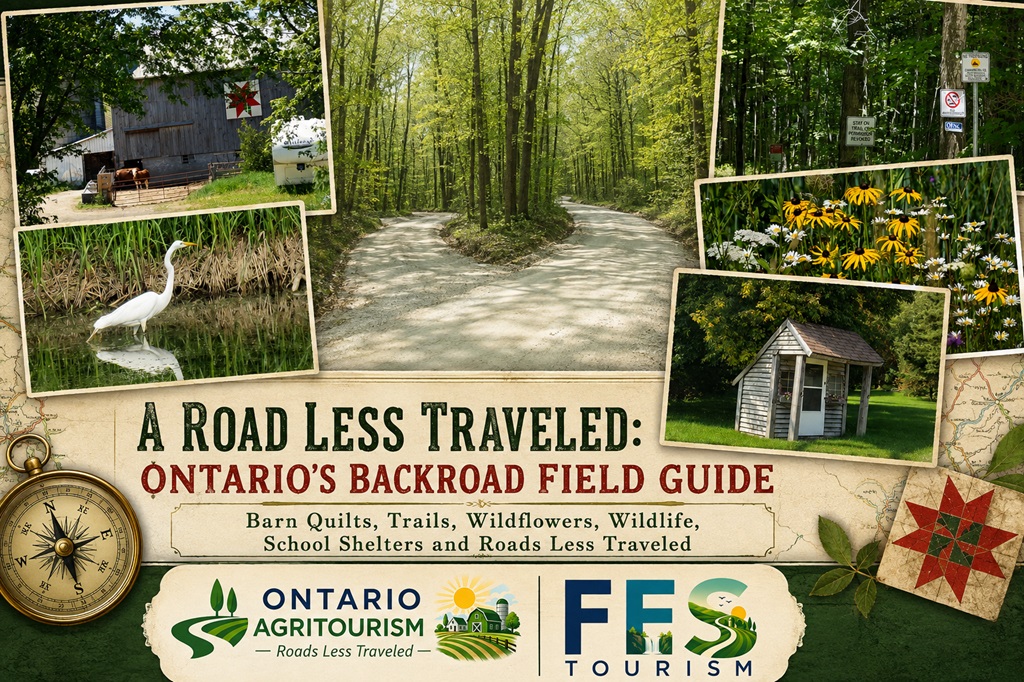
A Road Less Traveled: Ontario’s Backroad Field Guide
“Ontario’s backroads are a rolling gallery, part folk art, part field note, part wildlife documentary. Here’s how to read
five favourites without leaving the shoulder.”
Part Four
1) Fun Roadside Signs & Farm (Barn) Quilts
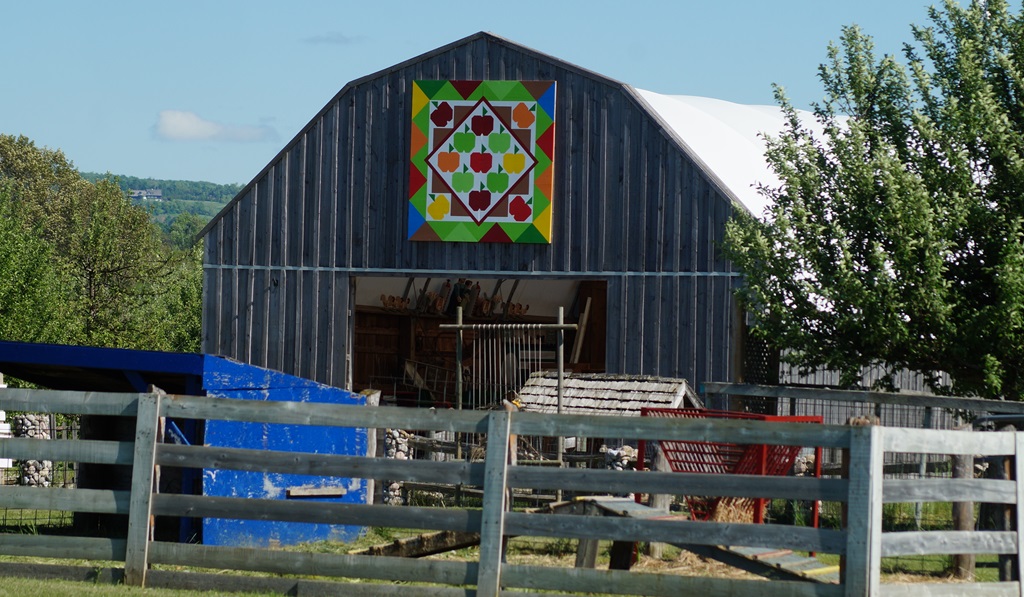
Hand-painted boards at the end of a laneway, witty puns on produce stands, and bright quilt blocks on barns turn concessions into open-air museums. Those colourful squares, often called barn quilts, are wooden panels painted with traditional quilt patterns (Ohio Star, Maple Leaf, Bear’s Paw). They celebrate local craft and heritage and, when linked on a “quilt trail,” double as a scavenger hunt through farm country.
What you’re seeing:
- Playful farm signs (“Egg-cellent Eggs,” “Knotty Pine Woodworks”), sand-blasted cedar name boards, plasma-cut steel silhouettes.
- Quilt blocks mounted high for visibility, sometimes numbered on community maps.
- Seasonal add-ons: arrows to sweet corn today, maple syrup in spring, pumpkins come fall.
Why they matter: Identity and wayfinding. Signs and quilts say “this place has a story,” helping small operations stand out and giving travellers a reason to smile (and stop, safely).
Roadside clue: Fresh paint and seasonal inserts mean an active enterprise. Faded boards can mark a retired farm shop or a heritage display.
2) Walking & Biking Trails
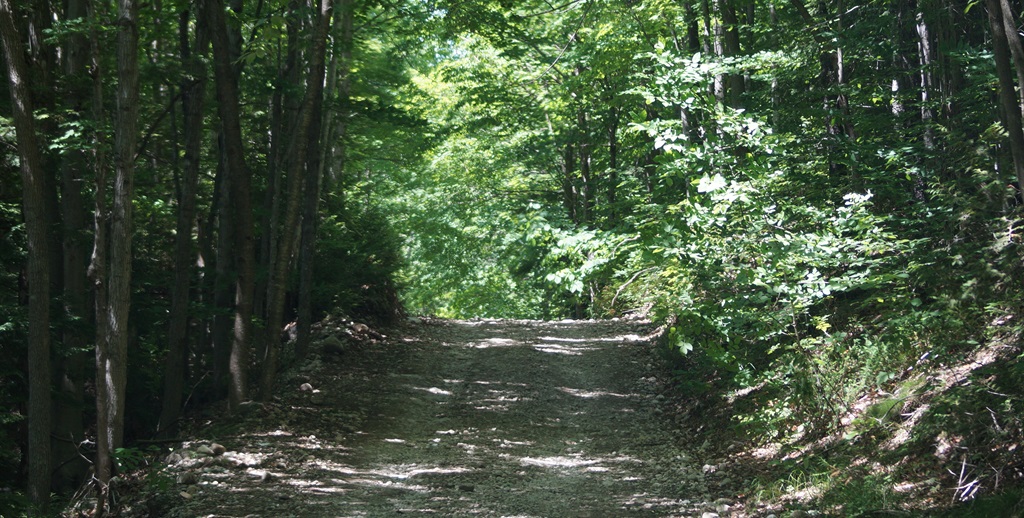
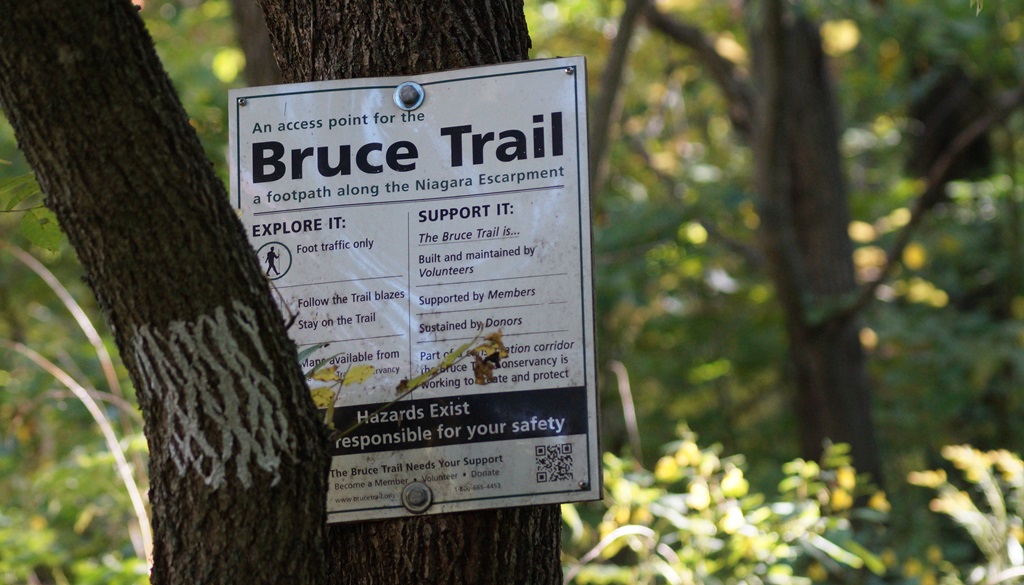
Rails-to-trails corridors stitch together small towns with long, gentle grades ideal for family cycling and birding. Forest loops and river paths are signed for walkers, skiers, riders, or multi-use, watch symbol icons at trailheads.
What you’re seeing:
- Rail trails: Wide crushed-stone beds, timber or steel trestles, interpretive plaques at former stations.
- Greenway spurs: Narrower dirt or woodchip paths along creeks, sometimes with boardwalks through wetlands.
- Wayfinding: Kilometre posts, etiquette boards (yield rules), and simple maps at kiosks.
Why they matter: Trails repurpose old infrastructure, support local tourism, and provide safe corridors for people and wildlife.
Roadside clue: A small parking pull-off with a map kiosk and a post-and-rail fence usually marks a trail access.
Etiquette: If you hop out for a quick photo, keep off the tread in muddy seasons to avoid rutting, and yield to the slowest users.
3) Roadside Wildflowers: Colour in Motion
Ditches are surprisingly busy habitats, moisture, sun, and periodic mowing create a shifting parade of blooms.
What you’re seeing (common stars):
- Spring: Trilliums (white)
- Early–mid summer: Chicory (sky-blue), oxeye daisy (white), bird’s-foot trefoil (yellow), viper’s bugloss (spiky blue).
- High summer: Common milkweed (pink globes, monarch magnet), black-eyed Susan (gold with dark centre), orange hawkweed, Tiger Lilies (orange)
- Late summer–fall: Goldenrods and asters in golds and purples, Queen Anne’s lace (delicate white), tansy (button-yellow).
Why they matter: They feed pollinators, stabilize soil, and make every drive feel like a postcard. Some are native; others are naturalized, either way, they’re the province’s seasonal confetti.
Roadside clue: Unmown strips buzzing with bees often signal municipal pollinator-friendly practices; neatly shaved shoulders suggest drift-control or sightline mowing.
Safety note: Park fully off pavement; beware soft shoulders, poison ivy, and ticks in tall grass.

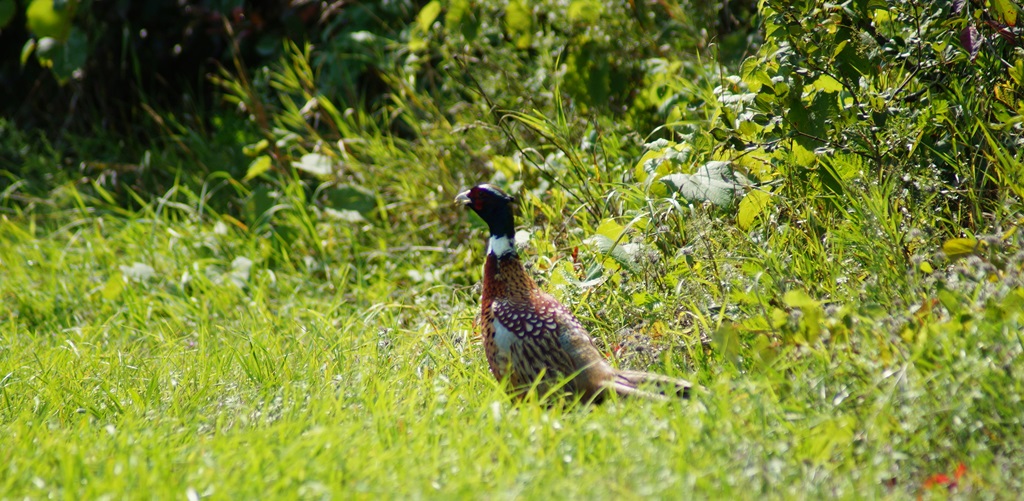
4) Wildlife Sightings (and How to Read Them)
Backroads are edge habitat, fields meet forest, water crosses gravel, and wildlife thrives in the seams.
Who you might meet:
- Deer: Dawn and dusk movers. Ears like satellite dishes; watch fence lines and creek crossings.
- Beavers: Dusk ripples on ponds; gnawed pencil-sharp stumps; muddy slides on banks.
- Red fox: Ginger flash with a white-tipped tail, often mousing along hayfields.
- Snowshoe hares/cottontails: The blur you see just after you say “was that—?” Edges of brush and fence corners.
- Ruffed grouse: Drumming thumps in spring; surprising explosive flush from ditch alder.
- Turkey vultures: Big dark birds teetering in a shallow V; use the wind like a lazy elevator.
- Red-winged blackbirds: Jet black males with bright red/yellow epaulettes staking claims over cattail marshes; insistent “conk-la-ree!”
Why they matter: Wildlife is the land’s feedback: healthy wetlands, hedgerows, and hayfields host more life, and remind drivers to slow down.
Roadside clue: Fresh tracks in dust after rain, droppings on gravel, or a sudden cloud of swallows over a field mean food activity nearby.
Etiquette: Observe from the vehicle or shoulder; never feed, approach, or call in animals. Use hazard flashers if you pause on a quiet road, and keep viewing brief.
5) Interesting School Shelters
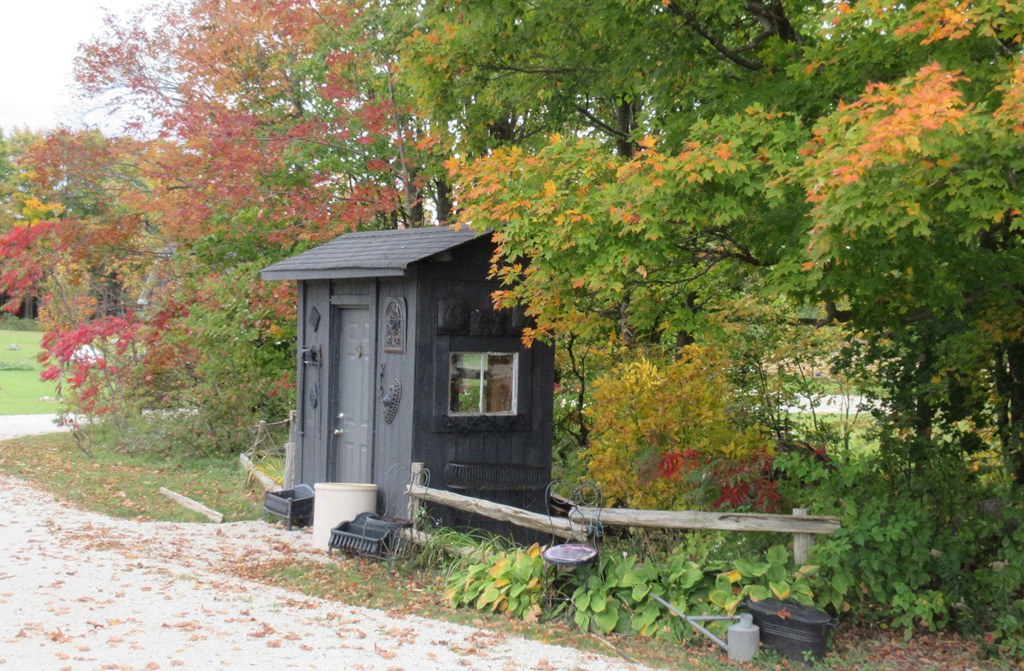
In snowbelt country, you’ll spot small huts at the ends of long laneways, simple shelters where kids wait out wind and sleet for the bus.
What you’re seeing:
- Compact, shed-like structures with a bench, window, and reflective tape; sometimes a solar light or house number.
- Setbacks that allow a vehicle to pull in off the road; openings oriented away from prevailing winds.
Why they matter: Practical rural design. They turn February into something survivable and signal a household’s care for safety and comfort.
Roadside clue: Fresh gravel pads and swept steps mean active use; whimsical paint or name plaques add community charm.
Etiquette: Treat as private spaces, enjoy the design from the roadside only.
Universal Roadside Etiquette (Finale Edition)
- Park fully off the travelled lane; never block driveways, field gates, or mailboxes.
- Take photos, not “souvenirs.” Leave stones, flowers, and signs as you find them.
- Share locations thoughtfully; skip posting precise coordinates for fragile sites.
- Pack out everything. Close any gate you opened (better yet, don’t open gates).
- Wave. It’s the rural “hello.”
Where the Series Leaves You
From fence lines to quilt lines, from drifted laneways to rail trails, Ontario’s backroads reward curious eyes and good manners. Keep the field guide handy, and you’ll never run out of stories between towns, only new ones to add. If you’d like, I can package all four parts as web-ready posts with excerpts, SEO titles, and a one-page printable checklist.