



Executive Summary
Canada’s first urban national park, Rouge National Urban Park, is rewriting the rulebook on city green-space. Spanning 79 km² across Toronto, Markham, Pickering, and Uxbridge, the Rouge stitches together Carolinian forest, working farms, ancient Indigenous village sites, two zoogeographic zones, and the last free-flowing river on the north shore of Lake Ontario. Since 2015 the park has removed 15 kilometres of derelict roads, daylighted buried streams, replanted 1.2 million native trees, and welcomed 1.4 million visits a year—proving that meaningful re-wilding can happen inside Canada’s largest metropolis and still leave room for cattle, canoeists, and commuters.
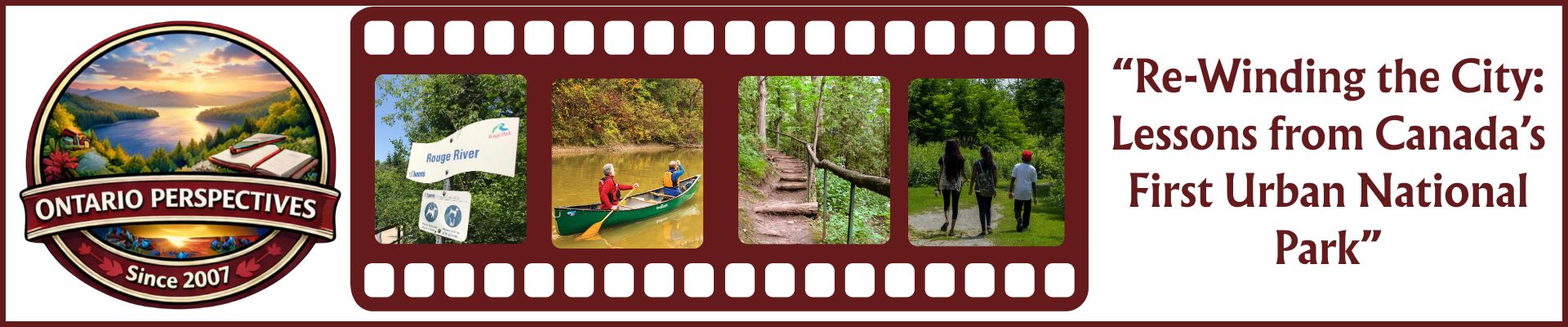
Welcome to the Rouge National Urban Park
Re-Wilding the City: Lessons from Canada’s First Urban National Park
The Go-Train doors slide open at Rouge Hill Station and a salt-tinged breeze rides in from the lake. Five minutes later your boots touch dirt; ten minutes after that you’re looking at tracks of white-tailed deer impressed in last night’s silt beside a tiny chorus frog. Skyscraper silhouettes shimmer on the southern horizon, yet warblers flit through trembling aspens as if the Bay Street canyon were a hundred kilometres away.
The idea of a “national park in the city” sounded audacious when local conservationists pitched it in the 1980s. The Lower Rouge Valley—carved by retreating glaciers, nourished by an undammed river—had somehow dodged the fate of neighbouring watersheds that became concrete storm drains. But the valley was anything but pristine: illegal dumps scarred slopes, gravel pits pocked tablelands, and subdivision maps labelled future cul-de-sacs. What saved the Rouge was its stubborn complexity. The valley held sacred sites for the Mississaugas of the Credit and the Chippewas of Georgina Island, remnant Carolinian pockets rare north of Lake Erie, and family farms still trucking sweet corn to city markets. Developers found the mosaic messy; activists found it irreplaceable.
Fast-forward to 2015: Parliament passes the Rouge National Urban Park Act, transferring a jigsaw of municipal lands and federal research farms to Parks Canada. Unlike wilderness parks managed for minimal human footprint, the Rouge adopted a “cultural landscape” model. Roughly two-thirds of the acreage would remain under 23 active farm leases—some fourth-generation—while the remainder pursued ecological restoration. That hybrid approach triggered both hope and skepticism: Could cows, coyotes, and commuters coexist?
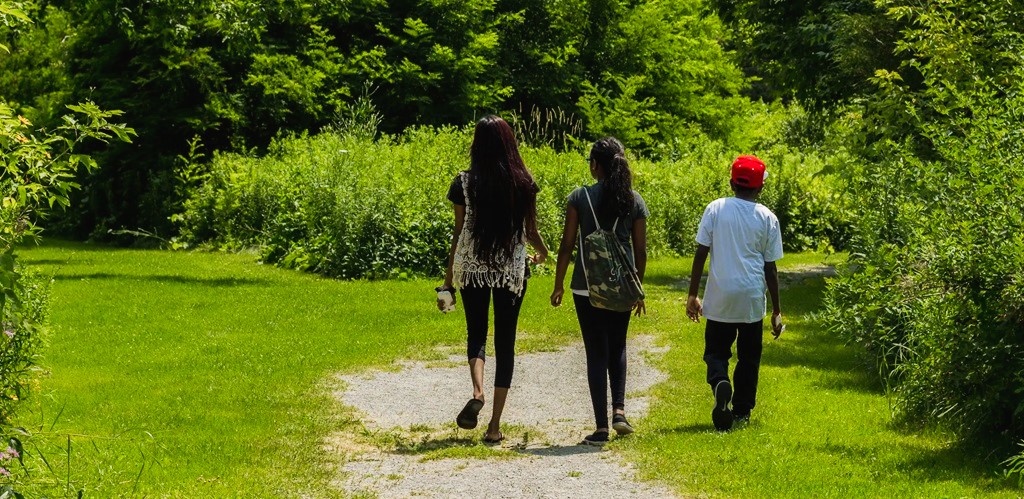
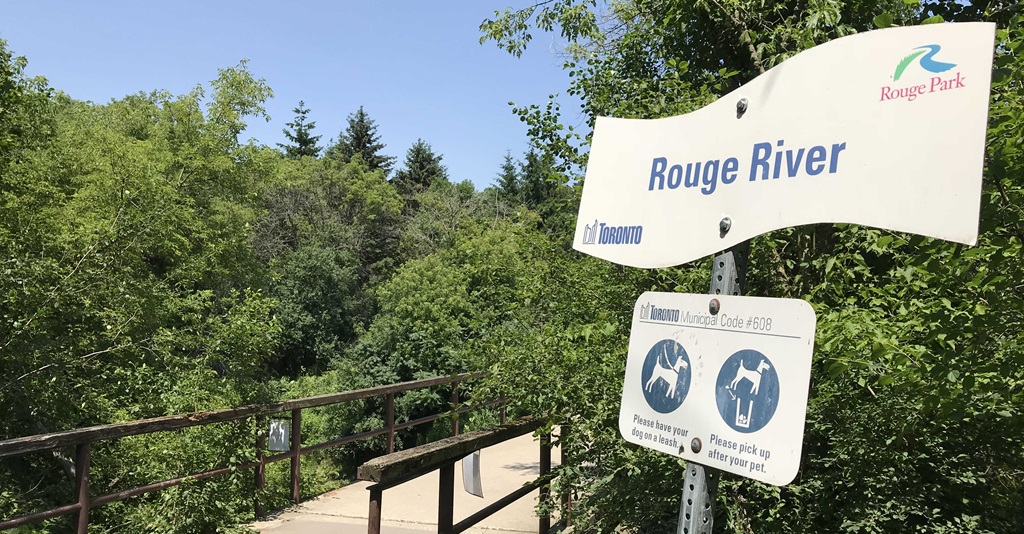
Walking the trails of the Rouge Nation Urban Park
-
Ecological Wins Without Evictions
Early results suggest yes. Tree-planting crews, guided by Indigenous knowledge keepers, re-established floodplain silver maples and slope-stabilizing dogwood. Wetland berms diverted silt-laden runoff away from amphibian breeding ponds. A buried tributary once forced through a steel culvert now braids across a new floodplain, cool enough for brook trout. Wildlife cameras record black bear wanderings most yearsa surprise for biologists who assumed the species extirpated from the Golden Horseshoe.
Crucially, farmers became partners, not tenants awaiting eviction. Transition incentives helped switch from conventional row crops to low-tillage grain rotations, reducing sediment loads by 30 % in pilot plots. Fence subsidies kept livestock out of headwater swales, and agro-tourism dinners now draw downtown foodies eager to sample “national-park beef.”
-
Transit First, Parking Later
Rouge planners flipped the usual visitation model: build transit links first, car parks later. Two GO-Transit stations and three Toronto Transit Commission bus routes now drop hikers within steps of trailheads. Park attendance jumped 42 % between 2017 and 2024, yet paved parking covers less than eight hectares—about the size of a suburban big-box lot. Carbon-counting economists estimate transit access prevents 1 600 tonnes of CO₂ annually compared with a drive-only scenario.
-
Citizen Science as Stewardship Glue
With limited scientific staff, Park managers leaned into crowdsourcing data. A ranger-led iNaturalist blitz tallied 1 738 species—orchids to otters—in a single June weekend, vaulting the Rouge to the top tier of global urban biodiversity hot spots. Water-quality kits handed to high-school classes now deliver weekly turbidity readings that guide volunteer paddlers clearing debris jams downstream. By making residents co-authors of the park’s natural history, Rouge staff turned potential vandals into vigilant caretakers.
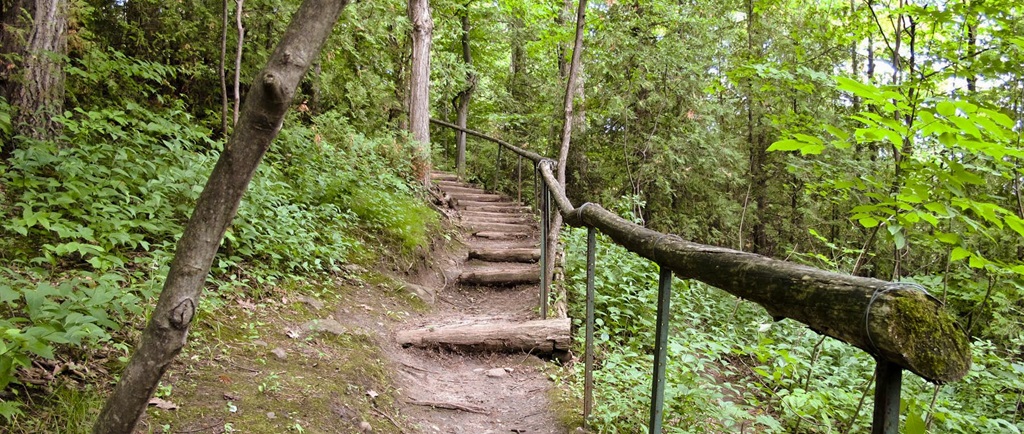
Forest path in the park
- Indigenous Co-Management Beyond Ceremony
Land acknowledgements alone would have rung hollow. Instead, Parks Canada negotiated a co-management framework where First Nations harvest traditional medicines, conduct cultural burns, and sit on hiring panels for restoration crews. Glen Rouge Campground features interpretive signage scripted by Anishinaabe language students, reminding visitors that “Toronto” itself riffs on Tkaronto—“the place in the water where trees stand.”
-
Re-Wilding as Flood Insurance
Toronto’s 1954 Hurricane Hazel still haunts civic memory; climate models suggest future storms could drop even more rain. By allowing the Rouge to spill naturally across reclaimed floodplain, engineers estimate the park now buffers 13 million cubic metres of stormwater—equal to 5 200 Olympic pools—reducing downstream flash-flood risk in the Port Lands redevelopment zone. In effect, re-wilding the valley became cheaper than pouring new concrete.
Trailheads for Further Exploration
| Dig Deeper | Where to Go | Why You’ll Like It |
| Read – “Stargazing Economies: Dark-Sky Tourism in the Canadian Shield.” | Ontario Perspectives | See how night-sky preserves turn remote townships into astro-hubs. |
| Explore – Tommy Thompson Park | 10 km of man-made peninsula on Lake Ontario | Spot 300+ bird species where rewilded rubble meets skyline views. |
| Explore – Cuyahoga Valley National Park | Sister model near Cleveland | Compare approaches to farming leases inside U.S. urban parks. |
| Participate – Christmas Bird Count (Rouge Sector) | Mid-December | Join citizen scientists logging overwintering raptors and finches. |
| Participate – Rouge Valley EcoRangers | May–October weekends | Volunteer trail patrol: collect litter, log wildlife, assist hikers. |
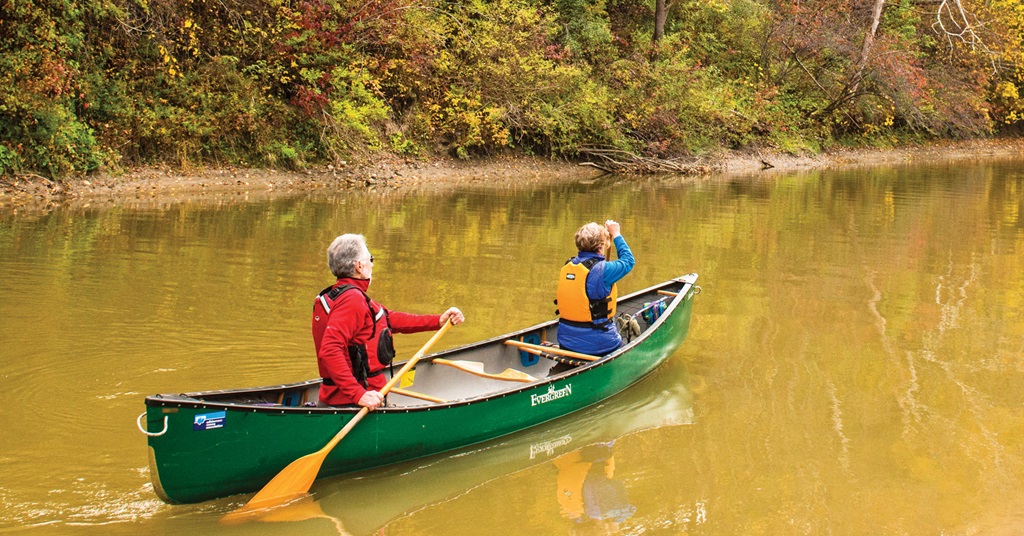
Canoeing on the Rouge River
Key Takeaways
- Complex landscapes can stay complex. Active farms, sacred spaces, and endangered orchids need not be zoned apart; they can share a legal framework that privileges stewardship over strict segregation.
- Transit is conservation. Every bus-or-train visitor is a parking lot not built and a wetland not paved.
- Re-wilding pays urban dividends. Storm-water storage, pollinator corridors, and mental-health benefits cost less than the concrete alternatives.
- Citizen science scales labour. Smartphones and curiosity extend the reach of chronically underfunded park staff.
- Indigenous voices are decision-makers, not invited guests. True co-management yields cultural revival alongside ecological gains.
Rouge National Urban Park proves that re-wilding is not a luxury reserved for far-flung mountains; it is a practical, liveable strategy for cities planning to grow without paving over the very nature that makes them worth living in.
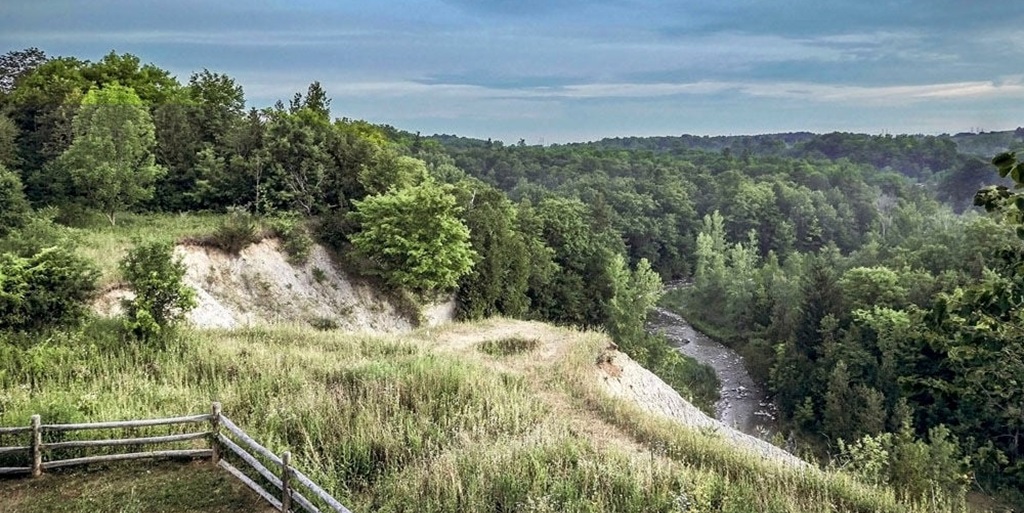
Looking over the Rouge Valley