












WHEN THE MUSIC STOPS
“The Fight to Save Ontario’s Festivals and Events”
PART NINE OF TEN
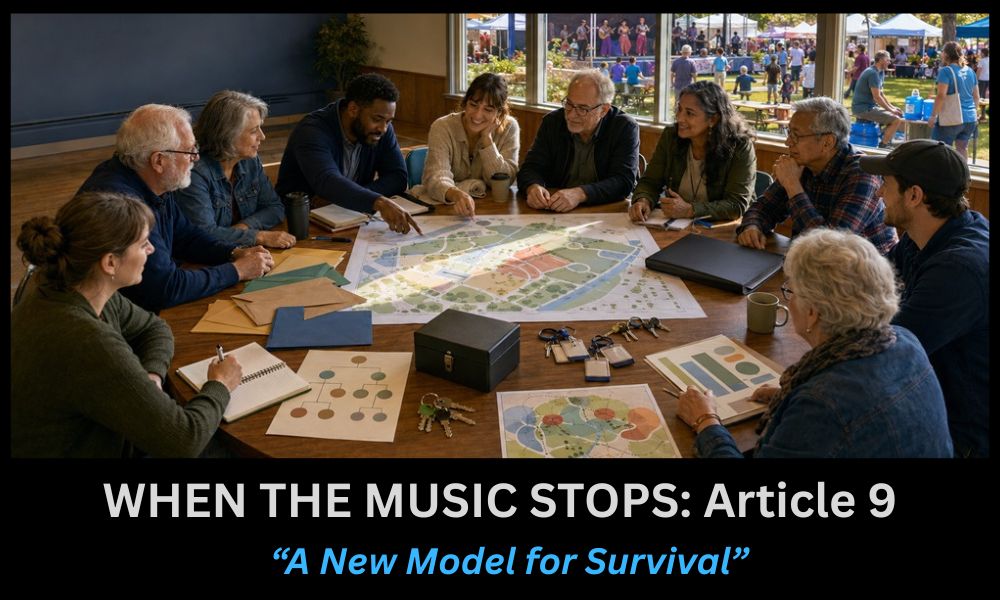
A New Model for Survival
“How Ontario’s Festivals Can Move from Annual Crisis Management to Long-Term Resilience”
Ontario Perspectives • Special Investigative Series
Executive Summary
Ontario’s festivals cannot solve today’s challenges by working harder within organizational structures that are already exhausted.
The traditional model—an annual grant, a major sponsor, a small committee and a frantic rush toward event day—has become dangerously fragile. The withdrawal of one funder, retirement of one leader, loss of one venue or cancellation of one weekend can place the entire event at risk.
Survival requires a different model.
The resilient festival should be treated as a year-round community organization rather than a temporary celebration that comes alive for one weekend. It needs clear purpose, diversified revenue, responsible reserves, shared professional services, planned leadership succession, realistic programming, documented knowledge and strong municipal and community partnerships.
This does not mean every festival needs permanent offices or a large paid staff. It means the organization must develop enough structure to protect itself from predictable risks.
The new model should be built upon eight connected foundations:
- A clear and continuing community purpose.
- Revenue from several sources.
- Financial reserves and realistic contingency planning.
- Leadership succession and knowledge transfer.
- A balanced partnership between volunteers and professionals.
- Shared services and regional cooperation.
- Measurable community, cultural and economic value.
- Flexible programming capable of responding to change.
Governments and funders must also change. Grants should support governance, planning, training, technology and organizational capacity—not only activities visible to visitors. Municipalities should treat important festivals as long-term partners. Sponsors should invest in community outcomes as well as promotional exposure.
No model can eliminate every risk. Weather will still disrupt events. Costs will still increase. Volunteers will still retire and funding decisions will remain uncertain.
Resilience does not mean an event will never experience difficulty.
It means that one difficult year does not have to become its final year.
About This Series
When the Music Stops is a ten-part examination of the pressures threatening Ontario’s festivals, fairs and community events—and the actions that could help them survive.
These gatherings generate economic activity, preserve traditions, support artists and local businesses, develop community leaders and give residents a shared sense of place.
When an event disappears, Ontario loses more than entertainment.
A little of the community disappears with it.
The Old Model Is Running Out of Strength
For decades, many Ontario festivals followed a familiar pattern.
A committee began meeting several months before the event. Members applied for grants, renewed sponsors, booked entertainment, recruited volunteers and hoped the weather would cooperate.
After the festival, bills were paid, equipment was stored and everyone took a well-earned break. Several months later, they began again.
That model succeeded because committed people made it succeed.
But the environment surrounding festivals has changed.
Insurance, security, equipment and entertainment costs have increased. Government and corporate funding has become less predictable. Regulations and safety expectations have grown. Volunteer leaders are aging, and younger volunteers have less time for year-round committee work.
Weather risk has become more complicated. Municipal properties face competing demands. Visitors expect accessible facilities, current information, digital ticketing, clear communication and high-quality experiences.
The work between festivals is no longer simply preparation for the next event.
It is governance, financial management, risk planning, community engagement, volunteer development, marketing, data collection and year-round relationship building.
An organization cannot carry all of that responsibility safely through last-minute effort and institutional memory.
Commitment remains essential.
Commitment without structure is no longer enough.
Survival Is Not a Strategy
When an organization is under pressure, its attention naturally shifts toward the immediate crisis.
Can the committee replace the sponsor that just withdrew?
Can it recruit enough volunteers for next weekend?
Can it pay the insurance premium?
Can it move the event when the park becomes unavailable?
These questions must be answered, but repeated crisis management leaves little time to address the conditions creating the crises.
The festival survives the current year without becoming stronger.
That is the survival trap.
Organizers may feel successful because the event opened on time, but the committee is more exhausted, the reserve is smaller and another experienced volunteer plans to leave.
The public celebration may appear healthy while the organization beneath it is weakening.
A sustainable model asks a different question:
What must be true for this event to remain healthy five years from now?
That question changes the conversation.
It moves attention from filling this year’s schedule toward protecting the event’s purpose, people, finances, knowledge and community relationships.
A View from the Festival Road
I have often said that the success of an event is never measured only by what happens on event day.
The public sees the entertainment, exhibits, parade, food and smiling volunteers. It does not see the structure holding everything together.
A festival can look successful and still be in serious trouble.
The field may be crowded, yet the event could be dependent upon one aging leader. The program may be excellent, but the committee may have no financial reserve. Sponsors may be visible everywhere, but one company may be paying for something the organization cannot replace if that support disappears.
True success includes what remains after the visitors go home.
Did the event strengthen its finances?
Did volunteers have a positive experience?
Were future leaders given meaningful responsibility?
Did the community receive value?
Were sponsors treated as partners?
Did the organizers learn and document what happened?
Is the organization in a better position to produce the next event?
If the answer is no, a busy weekend may have hidden an unsuccessful year.
Eight Foundations of a Resilient Festival
No single change will secure an event’s future.
Resilience is created when several strengths support one another.
-
A Clear Community Purpose
An event must understand why it exists.
Purpose guides programming, partnerships, sponsorship, volunteer recruitment and difficult financial decisions. Without it, the event becomes a collection of activities that may be entertaining but are not connected by a clear reason for continuing.
The purpose should answer:
- What community need does the event serve?
- Whose stories, traditions or experiences does it celebrate?
- What makes it different from other events?
- Who should benefit?
- What would the community lose if it disappeared?
Purpose does not prevent change. It helps the organization decide which changes are appropriate.
A program can be retired without abandoning the mission. A new audience can be welcomed without discarding the event’s identity. The methods may change while the purpose becomes stronger.
-
Revenue from Several Sources
An event dependent upon one grant, sponsor or weekend of admission revenue is vulnerable.
Diversification does not mean pursuing every possible income opportunity. It means creating a balanced revenue structure in which the loss of one source does not immediately threaten the event’s existence.
Possible sources include:
- Municipal and provincial grants.
- Federal cultural, tourism or community funding.
- Corporate sponsorship.
- Local business partnerships.
- Admissions and ticketing.
- Vendor and concession fees.
- Parking revenue.
- Donations and community fundraising.
- Memberships or “friends of the festival” programs.
- Merchandise.
- Beverage and food operations.
- Lotteries or raffles where legally permitted.
- Year-round workshops or smaller events.
- Facility or equipment rentals.
- Digital content and promotional partnerships.
- Endowment or community-foundation income.
Earned revenue can provide flexible money that is not restricted to one grant project. Imagine Canada identifies earned revenue as one way non-profit organizations can diversify funding and strengthen financial resilience.
However, revenue generation must remain connected to mission.
An event should not introduce a business activity simply because it might produce money. Organizers must consider startup costs, volunteer capacity, risk, tax implications, market demand and whether the activity supports or distracts from the event’s purpose.
Diversification should strengthen the festival.
It should not create several new problems in place of one old problem.
Source: Imagine Canada—Strengthening Your Nonprofit’s Financial Foundation: Earned Revenue
-
Reserves and Contingency Planning
Many festivals budget to break even.
That may appear responsible, but an event that finishes every year with nothing available for the next emergency is not financially secure.
A reserve provides time.
It can help the organization withstand weather cancellation, replace essential equipment, manage delayed grants or respond when a sponsor withdraws.
The appropriate reserve will differ according to the event’s budget, insurance, contractual obligations and exposure to risk. There is no single percentage suitable for every festival.
Each board should adopt a written reserve policy identifying:
- The purpose of the reserve.
- The target amount or range.
- Circumstances in which it may be used.
- Who can authorize the expenditure.
- How the reserve will be replenished.
- Where the money will be held.
- How it will be reported to members and funders.
The reserve should not become money accumulated without purpose while the event neglects its mission. Nor should it be treated as an available fund for routine budget overruns.
It is organizational protection governed by policy.
A contingency plan should accompany it. The board should consider what it would do if attendance fell sharply, a major sponsor withdrew, severe weather cancelled a day or an essential supplier became unavailable.
The first time those scenarios are considered should not be during the emergency.
-
Leadership Succession and Knowledge Transfer
Every critical position should have someone learning how it works.
That does not require naming an immediate replacement for every leader. It means the organization is continually developing people and distributing knowledge.
A resilient structure can include:
- Vice-chair, chair and past-chair rotations.
- Deputy or assistant roles.
- Committee co-leads.
- Mentorship between experienced and emerging volunteers.
- Written position descriptions.
- Annual transfer meetings.
- Centralized digital records.
- Emergency access to passwords, contracts and banking information.
- Term limits combined with advisory roles.
- A skills inventory identifying future leadership gaps.
Succession should not be treated as a conversation about forcing someone to retire.
It is risk management.
Experienced leaders should be honoured for what they know. They should also be supported in transferring that knowledge before illness, exhaustion or circumstance makes the transition urgent.
The strongest legacy is not being remembered as the only person who could run the event.
It is preparing others to carry it forward.
-
A Balanced Partnership Between Volunteers and Professionals
Volunteer leadership is one of the festival industry’s greatest strengths.
It connects the event to the community and allows residents to develop skills, relationships and civic pride.
Volunteerism should not be used as an excuse to assign specialized or unreasonable responsibilities to people without proper support.
Some work increasingly requires professional expertise:
- Accounting and financial reporting.
- Insurance and risk assessment.
- Engineering and temporary-structure approvals.
- Legal and contractual review.
- Emergency planning.
- Accessibility audits.
- Sponsorship development.
- Digital systems and cybersecurity.
- Marketing and audience research.
- Event production and technical management.
Not every festival can afford permanent staff. That does not mean it must choose between doing everything through volunteers and hiring a complete professional team.
Several models are possible:
- A part-time year-round coordinator.
- A seasonal event manager.
- A shared professional employed by several festivals.
- Municipal staff support through a partnership agreement.
- Contract specialists hired for defined tasks.
- A regional service hub.
- College or university partnerships supervised by qualified professionals.
- Retired professionals serving in properly defined advisory roles.
The objective is not to professionalize the community out of the festival.
It is to give volunteers enough support that their contribution remains safe, rewarding and sustainable.
-
Shared Services and Regional Cooperation
Ontario’s festivals repeatedly purchase or develop many of the same services.
They need insurance advice, ticketing, volunteer screening, accessibility guidance, weather monitoring, equipment, accounting, contract templates, marketing tools and emergency-planning support.
Working independently, smaller events may pay more, receive inconsistent advice or go without services they cannot afford.
Shared services could include:
- Group insurance exploration.
- Joint equipment ownership or rental.
- Regional storage.
- Shared volunteer-management systems.
- Accounting and bookkeeping.
- Legal templates and contract review.
- Bulk purchasing.
- Accessibility consulting.
- Joint training.
- Marketing and media support.
- Sponsor prospect research.
- A regional roster of qualified suppliers.
- Shared seasonal staff.
- Transportation and shuttle coordination.
- Waste-management contracts.
The Ontario Nonprofit Network describes shared platforms as a way of reducing administrative barriers so community initiatives can concentrate on their work. The exact legal model will not suit every established festival, but the principle is valuable: organizations do not need to duplicate every administrative function.
Shared service arrangements require written agreements covering cost, ownership, liability, scheduling, maintenance, confidentiality and decision-making.
Cooperation must be structured—not based solely upon goodwill.
Sources: Ontario Nonprofit Network—Shared Platforms; Ontario Nonprofit Network—Services for Nonprofits
-
Measurable Community, Cultural and Economic Value
Festivals often describe themselves as important, but they do not always collect the evidence needed to prove it.
Attendance is only one measure.
A resilient event should understand and document:
- Visitor origin.
- Local and visitor spending.
- Overnight stays.
- Volunteer numbers and hours.
- Employment and supplier spending.
- Funds raised for community groups.
- Businesses and organizations participating.
- Artists, performers and producers supported.
- Youth leadership opportunities.
- Accessibility improvements.
- Cultural traditions preserved.
- Resident and visitor satisfaction.
- Media and digital reach.
- Community partnerships.
- Environmental performance.
- Problems experienced by neighbours and surrounding businesses.
Economic information matters because governments and sponsors make investment decisions.
Community and cultural information matters because not every valuable outcome can be converted into visitor spending.
A small heritage festival may not generate the financial impact of a large music event, yet it may preserve a story, tradition or identity that belongs nowhere else.
The event should be able to explain both kinds of value.
Ontario’s Tourism Regional Economic Impact Model can help estimate tourism-related economic effects, but events also need accessible tools suited to smaller organizations and non-economic outcomes.
Source: Ontario Tourism Regional Economic Impact Model
-
Flexible and Realistic Programming
An event should not measure success by how much programming it can add.
Every activity creates costs, volunteer requirements, space needs, risk and administrative work.
A resilient festival regularly asks:
- Does this program advance our purpose?
- Does the audience value it?
- Can we afford it?
- Do we have the people to deliver it properly?
- Does it duplicate something available elsewhere?
- Can it be scaled, moved or postponed?
- Is it accessible?
- What happens if weather or a supplier disrupts it?
- Should another organization lead it?
- Would the event become stronger if this activity were removed?
Some festivals need to become smaller before they can become sustainable.
Reducing the number of days, concentrating on the strongest programs or limiting attendance may protect quality and reduce risk.
Growth is not always progress.
A focused event that can continue is more successful than an ambitious event that exhausts its organization.
From an Annual Event to a Year-Round Organization
The public experience may last one day or one weekend.
The organization must operate throughout the year.
That does not mean volunteers should be in constant production mode. It means essential responsibilities are distributed across a manageable annual cycle.
Immediately after the event
- Thank volunteers, sponsors and partners.
- Pay suppliers and reconcile revenue.
- Document incidents and insurance concerns.
- Gather visitor and vendor feedback.
- Hold a structured debrief.
- Record recommendations while memories are fresh.
- Celebrate the team before everyone disperses.
During the renewal period
- Allow volunteers genuine time to rest.
- Prepare financial reports.
- Update operating manuals and contact information.
- Review purpose, programming and community impact.
- Identify leadership vacancies.
- Begin grant and sponsor research.
During the planning period
- Approve the budget and risk plan.
- Confirm leadership and committee responsibilities.
- Secure the venue and major suppliers.
- Launch sponsorship and partnership discussions.
- Recruit and train volunteers.
- Establish weather and emergency procedures.
During the delivery period
- Confirm responsibilities and communication systems.
- Monitor safety, finances and volunteer workload.
- Record decisions and changes.
- Avoid placing every problem upon one leader.
- Protect enough capacity for responsible event-day management.
A year-round cycle creates rhythm.
Without it, every year feels like starting again.
The Festival Resilience Dashboard
Boards need a simple way to see whether the organization is becoming stronger or weaker.
A quarterly resilience dashboard could monitor ten questions:
- Do we have a clear and current purpose?
- Is our budget realistic?
- Are our revenue sources diversified?
- Is our reserve growing or declining?
- Do critical positions have backups?
- Are volunteers being developed and retained?
- Are important records complete and accessible?
- Is the event maintaining community and sponsor support?
- Are major risks documented and insured where possible?
- Is the organization stronger than it was one year ago?
Each area could be marked:
- Green: Healthy.
- Yellow: Needs attention.
- Red: Immediate risk.
The dashboard is not intended to replace proper financial reporting, risk analysis or strategic planning.
It prevents warning signs from remaining hidden inside separate committee reports.
A board that sees several red indicators should not respond by adding more programming.
It should stabilize the organization.
A Five-Year Plan That Volunteers Can Actually Use
Strategic plans sometimes become long documents written by consultants and rarely opened after approval.
A festival’s plan should be concise enough to guide decisions.
A practical five-year plan can identify:
- The purpose and values of the event.
- The communities and audiences it serves.
- The traditions that must be protected.
- Programs that need renewal.
- Financial and reserve targets.
- Leadership-succession priorities.
- Volunteer-development goals.
- Municipal and community partnerships.
- Venue and infrastructure needs.
- Accessibility improvements.
- Weather and emergency resilience.
- Measures of community and economic impact.
- Decisions the organization will stop postponing.
Every objective should have a responsible person, target date, approximate cost and way of measuring progress.
The plan should be reviewed annually.
A plan that cannot adapt is not strategic.
It is simply a prediction.
Grants Should Build Organizations, Not Only Programs
Many funding programs concentrate on what the public will see: performances, marketing, programming and visitor experiences.
Those investments are valuable.
However, an event cannot deliver excellent public programming without a functioning organization beneath it.
Festivals also need support for:
- Governance reviews.
- Strategic planning.
- Financial systems.
- Volunteer-management technology.
- Leadership development.
- Succession planning.
- Accessibility assessments.
- Risk and emergency planning.
- Audience research.
- Economic-impact measurement.
- Digital security.
- Shared-service development.
- Fundraising and grant-writing capacity.
- Organizational renewal.
The Ontario Trillium Foundation has used funding approaches intended to help non-profit organizations build capacity, resilience and sustainability. That principle should be applied more consistently to festival funding.
The public may never see the new bookkeeping system, board training or succession plan.
It will see the festival that survives because those investments were made.
Sources: Ontario Trillium Foundation; Ontario Nonprofit Network—Nonprofit Sustainability
A New Relationship with Sponsors
Traditional sponsorship often concentrates on visibility.
The sponsor pays for a logo on a banner, program, stage or website.
Visibility still has value, but festivals and sponsors can build stronger partnerships around shared community outcomes.
A sponsor might support:
- A volunteer leadership program.
- Accessible pathways and viewing areas.
- Youth participation.
- Shade and hydration stations.
- Local artist presentations.
- Community transportation.
- Waste reduction.
- Emergency preparedness.
- Cultural interpretation.
- A festival reserve or resilience fund.
- Training and equipment shared among several events.
These investments tell a more meaningful story than logo placement alone.
Sponsors should still receive measurable benefits, recognition and professional service. But the relationship can move from purchasing exposure toward strengthening the community in which the sponsor operates.
That gives both parties a stronger reason to continue.
A New Relationship with Municipalities
Festivals and municipalities often interact through permits, grants, road closures and facility bookings.
A resilience model requires a deeper partnership.
Municipalities should identify events of long-term community significance and develop multi-year agreements covering:
- Venue access.
- Municipal services.
- Fees and in-kind contributions.
- Emergency responsibilities.
- Site restoration.
- Accessibility.
- Data collection.
- Neighbourhood communication.
- Environmental expectations.
- Long-term infrastructure needs.
- Procedures for construction or venue displacement.
Events should not receive unconditional support merely because they have existed for many years.
In return for partnership, they should demonstrate sound governance, financial accountability, community benefit and a willingness to adapt.
The relationship should move beyond an annual request for assistance.
Municipalities and events should plan together.
Agricultural Fairs and the OAAS Model
Agricultural fairs are events, but Ontario’s agricultural societies are principally represented by the Ontario Association of Agricultural Societies.
OAAS is a separate and considerably more stable organization than the former Festivals and Events Ontario. It provides leadership, education, resources, district representation and an annual provincial convention for more than 210 agricultural societies.
The broader festival community should not attempt to duplicate or absorb OAAS.
It can learn from the strength of its structure.
The district system creates regional connections and a route through which local concerns can reach provincial leadership. Its education and convention bring experienced and emerging fair leaders together. Its clear mandate gives members a reason to participate.
A future provincial festival association should work alongside OAAS wherever interests overlap, including volunteer development, insurance, government funding, accessibility, weather preparedness and community impact.
Collaboration can strengthen both sectors while respecting their different histories and mandates.
Source: Ontario Association of Agricultural Societies
What a Regional Festival Hub Could Look Like
A group of neighbouring festivals could create a voluntary regional hub.
Each event would retain its name, board, finances and community identity. The hub would provide selected services that are difficult or expensive to maintain independently.
One part-time regional coordinator might:
- Maintain a shared supplier directory.
- Organize volunteer and board training.
- Coordinate equipment rentals.
- Manage a regional event calendar.
- Identify scheduling conflicts.
- Research grants and sponsorship prospects.
- Arrange joint accessibility or risk assessments.
- Support data collection.
- Connect events with municipal departments.
- Help organizers document their procedures.
- Coordinate emergency communication resources.
The hub could be funded through modest member contributions, municipal participation, regional tourism support, shared-service fees and transitional grants.
It would not manage every festival.
It would strengthen the organizations that do.
The model could be particularly valuable in rural and northern areas where professional services and suppliers are less readily available.
What Government Can Do
Governments cannot—and should not—operate every festival.
They can create conditions in which strong community organizations are more likely to survive.
The province can:
- Introduce multi-year operating and resilience funding.
- Support governance, succession and organizational capacity.
- Fund shared-service pilots.
- Develop practical insurance and risk resources.
- Help create a province-wide festival data system.
- Coordinate requirements across ministries.
- Recognize volunteer-run events in program design.
- Provide sufficient application and reporting time.
- Permit reasonable reserves without penalizing organizations.
- Support a new independent provincial festival association.
- Work with OAAS and other established organizations on shared issues.
- Create emergency recovery assistance after extraordinary cancellations.
Funding should reward responsible planning without making applications so complex that only large organizations can compete.
What Funders Can Do
Corporate, foundation and government funders can strengthen the sector by:
- Offering multi-year commitments.
- Supporting core operations.
- Allowing administrative and professional costs.
- Funding renewal and capacity building.
- Encouraging realistic contingency budgets.
- Coordinating reporting requirements.
- Providing decisions early enough for responsible planning.
- Supporting collaboration without forcing artificial mergers.
- Recognizing community and cultural impact alongside tourism spending.
- Funding evaluation proportional to the size of the grant.
A festival cannot build long-term resilience with funding that arrives too late to make long-term decisions.
What Festival Boards Can Do Now
The new model does not require an event to change everything immediately.
A board can begin with ten actions:
- Reconfirm why the event exists.
- Identify its five greatest risks.
- Determine which person or revenue source has become indispensable.
- Create backups for critical leadership positions.
- Document essential knowledge and access.
- Adopt a reserve and contingency policy.
- Evaluate every major program.
- Ask volunteers what would make participation sustainable.
- Meet municipal and community partners outside the funding cycle.
- Choose one structural improvement to complete before adding new programming.
The most important step is beginning before the crisis.
Reasons for Hope
Festivals are created by people who know how to solve problems.
They transform streets, parks, fields and community halls into places of celebration. They coordinate volunteers, businesses, governments, performers and visitors. They adapt when equipment fails, storms approach or plans change.
That ability has carried many events through decades of difficulty.
The new model does not replace that creativity and determination.
It protects them.
Diversified revenue gives organizers options. Reserves give them time. Professional support reduces risk. Shared services reduce duplication. Succession planning carries knowledge forward. Community data strengthens advocacy. Clear purpose prevents growth from becoming distraction.
Established events also possess valuable foundations: public recognition, community relationships, traditions, experienced volunteers, sponsor history and memories shared across generations.
They are not starting over.
They are rebuilding from strength.
From Exhaustion to Resilience
For too long, the festival industry has treated exhaustion as proof of commitment.
The person who answers every question, works the longest hours and solves every emergency is praised as indispensable.
But an organization dependent upon exhausted heroes is not resilient.
It is vulnerable.
The new model distributes knowledge, responsibility, income and leadership. It allows volunteers to contribute without sacrificing their health or family life. It introduces professional support where risk and complexity demand it.
It protects the event from the loss of one person, one funder or one weekend.
Not every festival needs to become larger.
Not every event needs permanent employees.
Not every tradition needs to change.
Every organization does need to understand its purpose, risks, finances, people and future.
That is the foundation of survival.
One Difficult Year Should Not Be the Last
No festival can eliminate uncertainty.
A storm may still arrive. A grant may still be denied. A sponsor may still withdraw and a valued leader may still become unavailable.
Resilience is not the promise that nothing will go wrong.
It is the capacity to absorb the shock, make responsible decisions and continue.
Ontario’s festivals have spent generations creating memories for their communities.
The next stage is to build organizations strong enough to protect those memories—and create new ones.
The celebration should not depend upon everything going perfectly.
Its future should be designed to survive when it does not.
Coming in Part Ten
Ontario’s Call to Action
The final article will bring the entire series together.
It will set out a coordinated provincial agenda for government, municipalities, funders, corporations, insurers, educational institutions, industry organizations, communities and festival boards.
Ontario must decide whether festivals are temporary entertainment to be funded when convenient—or essential community infrastructure worth protecting.
The future of hundreds of celebrations may depend upon that decision.
Explore the Series
- Part One: The Celebration We Could Lose
- Part Two: The Funding Crisis Behind the Fireworks
- Part Three: When Red Tape Replaces the Welcome Mat
- Part Four: The Cost of Being Careful
- Part Five: Who Will Raise the Tent Tomorrow?
- Part Six: When Nature Changes the Plan
- Part Seven: Who Will Speak for Ontario’s Festivals Now?
- Part Eight: When an Event Forgets Why It Exists
- Part Nine: A New Model for Survival
- Part Ten: Ontario’s Call to Action
Special Report
What Happened to Festivals and Events Ontario?
The Sudden Closure, the Unanswered Questions and the Search for Ontario’s New Festival Voice
Links can be added as the articles are published on Ontario Perspectives and OAT Field Notes.
Selected Sources and Further Reading
- Imagine Canada—Strengthening Your Nonprofit’s Financial Foundation: Earned Revenue
- Imagine Canada Standards
- Ontario Nonprofit Network—Nonprofit Sustainability
- Ontario Nonprofit Network—Shared Platforms
- Ontario Nonprofit Network—Services for Nonprofits
- Ontario Trillium Foundation
- Ontario Tourism Regional Economic Impact Model
- Ontario Association of Agricultural Societies
- Imagine Canada—Succession Planning
This article provides a strategic model for discussion. Individual events should obtain qualified financial, legal, insurance, accessibility and risk-management advice appropriate to their circumstances.